Mount of the Holy Cross: The 1873 Jackson photograph, the cross, and the meanest descent on a Sawatch 14er
Holy Cross is named for the snow-filled cross on its east face — captured by William Henry Jackson in 1873 in a photograph that helped birth the National Park movement and turned this peak into a religious pilgrimage. Y'all, the climb is no joke either.

In summer 1873, the photographer William Henry Jackson packed an 11-by-14-inch wet-plate camera, glass plates, and 200 pounds of darkroom chemicals up the side of an unnamed Sawatch peak with the Hayden Survey, set up on a high ridge at 13,000 feet, and made the photograph that would turn the mountain into a national subject. On the east face, snow had filled a pair of perpendicular couloirs — a pattern visible only in summer, only from one ridge — and Jackson's plate captured a brilliant white cross etched into the dark mountain face. Heck of a morning of work.
The photograph traveled. It got reproduced everywhere, contributed to the popular case for setting aside Western lands for public protection, and turned Mount of the Holy Cross into a religious pilgrimage destination. The peak was briefly a National Monument from 1929 to 1950 — the only 14er ever to carry that designation — and was redesignated a wilderness area in 1980.
The peak at a glance
- Elevation: 14,011 ft (4,271 m)
- Rank in Colorado: 54th of 56 peaks above 14,000 ft
- Range: Sawatch Range
- County: Eagle County
- Coordinates: 39.4669° N, 106.4814° W
- Standard route: North Ridge from Half Moon Pass (Class 2) — 12 mi round-trip, ~5,600 ft gain
- Public land: Holy Cross Wilderness, White River National Forest
How Mount of the Holy Cross got its name
The cross is real. The east face holds two perpendicular couloirs — a vertical 1,500-foot couloir crossed by a horizontal 750-foot ledge — that fill with snow in winter and stay visible into summer. From a specific viewpoint on the Notch Mountain ridge to the east, the two snowfields line up into a clear cruciform shape. From anywhere else, the cross hides.
The right arm has degraded since Jackson's photograph — climate-driven snow loss has left the right horizontal less symmetric than it was in 1873. The cross still forms in good snow years and runs partial in dry ones. Y'all, you can still see the thing in June; you just won't see it as crisply as Jackson did.
The peak's name shows up in regional records by the 1860s, applied by early prospectors and trappers who could see the cross from valley vantages. The Hayden Survey kept the name when it cataloged the peak.
The standard route
The standard North Ridge starts at the Half Moon Pass trailhead off Tigiwon Road south of Minturn. Y'all, this route is unusual: it starts with a 1,000-foot drop into Half Moon Creek before any climbing, which means the return ends with a 1,000-foot uphill at the end of an already long day. Total elevation gain on the round trip is 5,600 feet, even though the net gain from trailhead to summit is only about 3,800 feet. Heck of a sting at the end.
From the bottom of Half Moon Creek, the trail climbs steadily up the north ridge on a sustained Class 2 line. Round trip is 12 miles. Plan on 8 to 11 hours car-to-car. Save real food and water for the last climb out.
Other ways up
The east-side approach via Notch Mountain includes a side-trip to the historic stone shelter at the summit of Notch — the prime viewpoint for the cross — built in the 1920s for the religious pilgrimages. Heck of a piece of standing history. Some parties combine Notch Mountain with the Holy Cross summit as a long traverse.
Cross Creek (south side) is a longer wilderness approach but doesn't open up an easier route to the top.
When to climb
The Colorado fourteener climbing season is short. The standard window runs from late June through mid-September — after the snow has melted off the trail and before the first serious autumn storm. Outside that window, you're committing to a winter ascent: snow travel, avalanche assessment, post-holing through drifts, and route-finding without a visible trail.
Inside the window, the rule that has saved more Colorado lives than any other is be off the summit by noon. Afternoon convective storms build over the high peaks almost daily in July and August. Lightning is the leading weather killer in the Rockies. Plan for a pre-dawn start — most experienced climbers leave the trailhead between 4:00 and 5:30 AM.
Where it sits
The peak sits inside the Holy Cross Wilderness, twenty miles south of Vail, accessed through the town of Minturn. The Tigiwon Road approach is high-clearance only above the lower trailhead — passenger cars typically park at the lower lot and walk the 1.5 miles up. Plan for it.
The Notch Mountain Shelter — the historic stone building at the summit of the adjacent peak, built for early-twentieth-century religious pilgrimages — still stands. It's one of the few summit-area shelters left in Colorado, and worth the side trip if you've got the legs.
What climbers wish they'd known
The Half Moon Creek descent makes the return way harder than it looks on a map. Y'all, that 1,000-foot uphill at the end of a 12-mile day catches climbers off-guard every season. Save real food and water for the last climb out. It's not a walk-back-to-the-car — it's another small mountain.
The cross looks best in early summer. June and early July hold the most snow in both arms. By mid-August the cross is usually partial. If photographing it is your goal, plan the trip for late June.
Before you go
A 14er is a long, exposed day at altitude. Read these first if you haven't already:
- Planning your first multi-day backpacking trip — same logistics apply to a long single-day summit push.
- How to choose the right trail difficulty — converting class ratings into honest fitness estimates.
- Leave No Trace, in one minute — alpine tundra heals on a geological clock. Stay on the trail.
Looking for the standard route on the map? Browse Colorado trails on Outdoors or jump to the Near Me view if you're already in-state.
If you liked this peak
- Mount Elbert — the Sawatch high point
- Mount Massive — the Sawatch second
- La Plata Peak — the Sawatch silver mountain
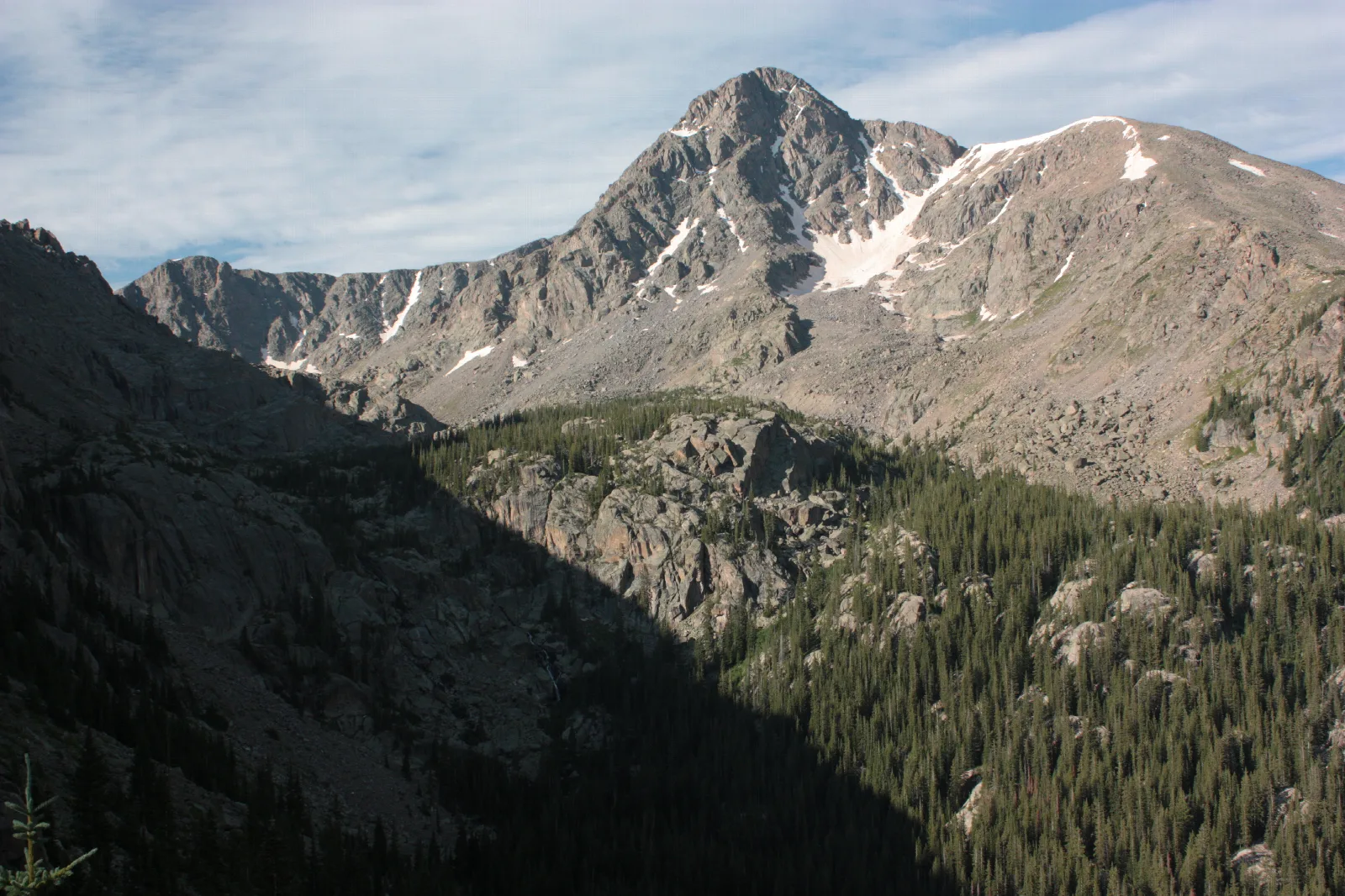
Hero photograph: The snow-filled cross couloir on Mount of the Holy Cross, Sawatch Range, Colorado. by Jeremiah LaRocco, licensed under CC BY-SA 2.0.