La Plata Peak: The Sawatch silver mountain, and a quieter alternative to Elbert
La Plata is Colorado's fifth-highest peak — eight miles south of Elbert on the same Sawatch spine. The Spanish name (la plata, "the silver") goes back to the early mining-era assays that turned Twin Lakes into one of Colorado's first silver districts. Heck of a quieter day than Elbert.

La Plata sits eight miles south of Mount Elbert on the same Sawatch spine, fifth in the Colorado elevation rankings, and the southern end of the four-peak supercluster (Elbert, Massive, Harvard, La Plata) that holds the four highest summits in the state. Despite the rank, La Plata gets a fraction of Elbert's traffic — the standard route is longer, the trailhead is harder to find, and the upper face has just enough Class 2 talus to filter out the casual day-hikers.
What you get in exchange is a quieter day in the Sawatch, on a peak with one of the most striking south-facing summit views in the range — the Collegiates running south and the Elk Mountains framed off to the southwest. Heck of a peak for folks who want a high-rank summit without the Elbert circus.
The peak at a glance
- Elevation: 14,343 ft (4,372 m)
- Rank in Colorado: 5th of 56 peaks above 14,000 ft
- Range: Sawatch Range
- County: Chaffee County / Lake County
- Coordinates: 39.0294° N, 106.4729° W
- Standard route: Northwest Ridge (Class 2) — 9.5 mi round-trip, ~4,500 ft gain
- Public land: San Isabel National Forest
How La Plata Peak got its name
"La Plata" is Spanish for "the silver." The name appears on nineteenth-century Spanish and Mexican mining-era maps and references the early silver assays out of the Twin Lakes and Cache Creek drainages on the south side of the peak. By the 1860s, La Plata was an established silver-mining district; the peak's name reflects the local economy of that era. The town of La Plata sat at the base of the peak in the late nineteenth century. It's a ghost town now.
The standard route
The standard Northwest Ridge starts at a trailhead off CO-82 west of Twin Lakes. The trail crosses Lake Creek on a footbridge, climbs steadily through aspens and lodgepole, and breaks treeline around 11,800 feet. From there it follows a clean ridge to the summit on a sustained Class 2 line — solid talus with some loose stretches and one mildly steep summit pitch. Heck of a clean climb.
Round trip is 9.5 miles with 4,500 feet of gain — comparable to Elbert's South Trailhead route in distance but slightly meaner under your boots.
Other ways up
The classic alternate is the Ellingwood Ridge — a long, exposed Class 5.0 traverse along La Plata's east ridge. Named for Albert Ellingwood, the early-twentieth-century Colorado climber who pioneered technical alpine routes across the state. About 2 miles of sustained scrambling with multiple Class 5 steps. Roping up is normal. One of Colorado's classic alpine ridge climbs and not a casual undertaking — y'all show up trained for this one.
The Southwest Ridge from the south side via Cache Creek is a less-trafficked, longer Class 2 alternative but works out of a rougher trailhead.
When to climb
The Colorado fourteener climbing season is short. The standard window runs from late June through mid-September — after the snow has melted off the trail and before the first serious autumn storm. Outside that window, you're committing to a winter ascent: snow travel, avalanche assessment, post-holing through drifts, and route-finding without a visible trail.
Inside the window, the rule that has saved more Colorado lives than any other is be off the summit by noon. Afternoon convective storms build over the high peaks almost daily in July and August. Lightning is the leading weather killer in the Rockies. Plan for a pre-dawn start — most experienced climbers leave the trailhead between 4:00 and 5:30 AM.
Where it sits
The peak sits in the Sawatch Range south of Twin Lakes — a small alpine community at the base of Independence Pass on CO-82. The trailhead is fifteen minutes from Twin Lakes and ninety minutes from Aspen over Independence Pass (closed in winter). Leadville is forty-five minutes north — heck of a town to base from for a Sawatch trip.
What climbers wish they'd known
The trailhead is unmarked from the highway. Y'all, the La Plata Trailhead pullout is a small dirt parking area off CO-82 about 14 miles west of Twin Lakes — no big sign visible from the road. Watch your odometer or you will drive right past it. Plenty of folks do every summer.
Check road status if you're coming from Aspen. Independence Pass is closed November through May. Outside summer, the Aspen-side approach adds significant driving time, and it's not worth attempting if the pass is borderline open.
Before you go
A 14er is a long, exposed day at altitude. Read these first if you haven't already:
- Planning your first multi-day backpacking trip — same logistics apply to a long single-day summit push.
- How to choose the right trail difficulty — converting class ratings into honest fitness estimates.
- Leave No Trace, in one minute — alpine tundra heals on a geological clock. Stay on the trail.
Looking for the standard route on the map? Browse Colorado trails on Outdoors or jump to the Near Me view if you're already in-state.
If you liked this peak
- Mount Elbert — the Sawatch high point
- Mount Massive — the Sawatch second
- Mount Harvard — the Collegiate showpiece
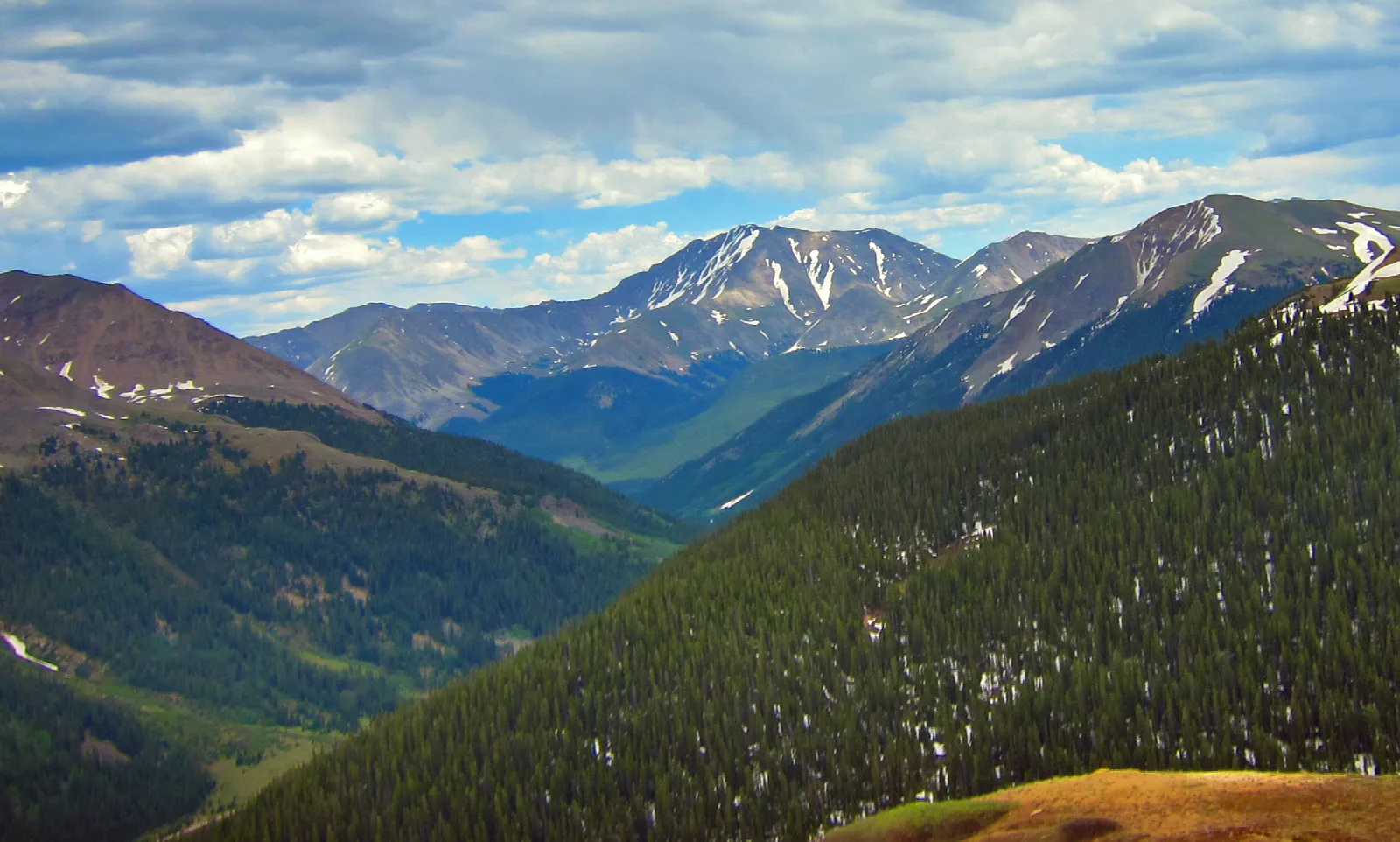
Hero photograph: La Plata Peak's north face seen from Independence Pass, Sawatch Range, Colorado. by Nan Palmero, licensed under CC BY 2.0.