Mount Massive: The longest 14er ridgeline in Colorado
Mount Massive does what its name says. Three miles of broken alpine ridge, five summits above 14,000 ft, and a 14-mile day that earns every step.

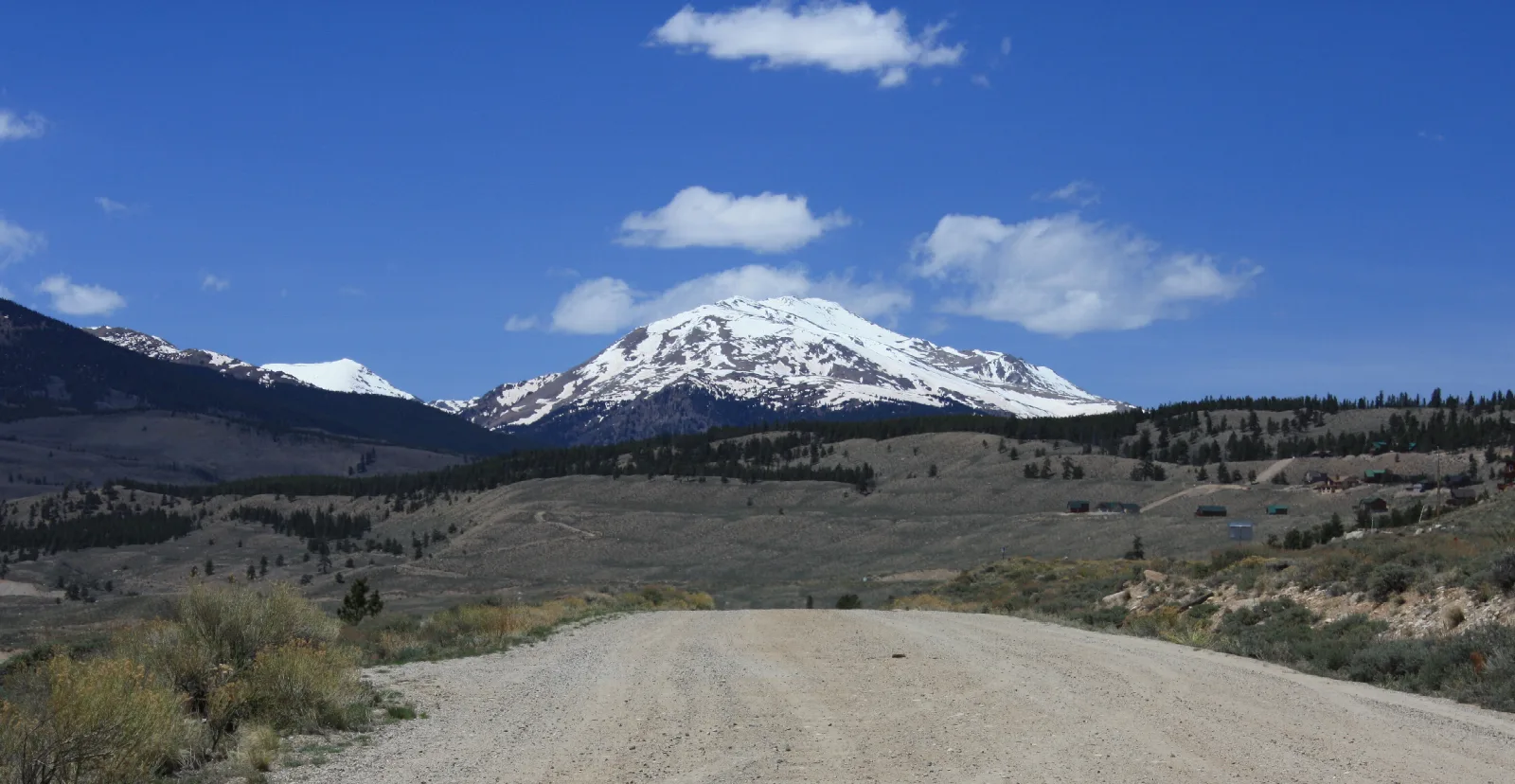
Mount Massive does exactly what it says on the label. Stand on the floor of the upper Arkansas Valley and look west, and the mountain just takes over the horizon — a three-mile-long crest of broken alpine rock holding five separate summits above 14,000 feet. That's the longest stretch of fourteen-thousand-foot ground in Colorado, and the high point is exactly ten feet shorter than Mount Elbert, sitting one drainage to the south. The two peaks have been swapping the "highest in the Rockies" title back and forth for over a century as USGS resurveys shave inches off each. There's a long-running Leadville joke about hikers hauling rocks up Massive to settle the argument once and for all.
The thing about Massive isn't the elevation — Elbert's still the king there by a single-digit margin. It's the scale. You spend most of the day above treeline. The standard route is fourteen miles. The summit ridge feels endless. If Elbert is the polite walk-up, Massive is the same workout with four extra hours of high-country exposure baked in. Heck yeah it's worth it.
The peak at a glance
- Elevation: 14,428 ft (4,398 m)
- Rank in Colorado: 2nd of 56 peaks above 14,000 ft
- Range: Sawatch Range
- County: Lake County
- Coordinates: 39.1875° N, 106.4756° W
- Standard route: East Slopes via Mount Massive Trail (Class 2) — 14 mi round-trip, ~4,500 ft gain
- Public land: Mount Massive Wilderness, San Isabel National Forest
How Mount Massive got its name
Henry Gannett, chief topographer for the Hayden Survey, dropped the name in 1874 — same season the survey labeled Elbert. Gannett wasn't being cute. He looked at the mountain and named it for what it obviously was. Most Colorado fourteeners come to a single sharp point. Massive doesn't. It holds its altitude across a long, broken ridge with three lower bumps (North Massive, Massive Green, South Massive) that fall just shy of the strict 300-foot prominence rule but get tagged on extended-list ascents anyway. From Twin Lakes you can see all of them.
The standard route
Standard play is the East Slopes via the Mount Massive Trail, starting from the same Halfmoon Road approach you'd use for Elbert. Just turn up the other side of the drainage. The trail kicks off in spruce-fir forest, climbs steadily to treeline around 11,800 feet, then traverses out onto talus and tundra benches along the east face. The final 800 feet to the summit is loose Class 2 — big stable blocks with patches of skittery scree mixed in. Trekking poles really earn their keep here on the descent.
Plan 8 to 11 hours car-to-car. About 4,500 feet of gain over 14 miles round-trip — that's roughly 50% more distance than Elbert's North Trail, with a slightly more honest footing crux up high. It's still Class 2. It's just Class 2 for longer.
Other ways up
For the long-day folks:
- The Massive Traverse. Starting from the south, you link South Massive → Massive Green → the main summit on a Class 2 ridge with a few honest Class 3 moves on the connector. Six to eight hours of nothing but high-altitude ridge walking. One of the great Colorado day-traverses if you're acclimated and the weather holds.
- Southwest Slopes from North Halfmoon Lakes. Same effort as the standard, way fewer people, slightly more route-finding once you break treeline. Worth doing if you've already climbed Massive once.
The standard trailhead is on the same Halfmoon Road as Elbert — just keep going 1.2 miles past the Elbert lot and watch for the sign on the right. It's easy to miss if you're driving in pre-dawn dark, so set your odometer.
When to climb
The Colorado fourteener climbing season is short. The standard window runs from late June through mid-September — after the snow has melted off the trail and before the first serious autumn storm. Outside that window, you're committing to a winter ascent: snow travel, avalanche assessment, post-holing through drifts, and route-finding without a visible trail.
Inside the window, the rule that has saved more Colorado lives than any other is be off the summit by noon. Afternoon convective storms build over the high peaks almost daily in July and August. Lightning is the leading weather killer in the Rockies. Plan for a pre-dawn start — most experienced climbers leave the trailhead between 4:00 and 5:30 AM.
Where it sits
Massive sits inside the Mount Massive Wilderness — 30,000 acres of designated wilderness dropped into the heart of San Isabel National Forest. Same thirty-minute drive from Leadville as Elbert, same Halfmoon Road approach, parking lots a mile and change apart. That's why the Elbert/Massive double is the classic weekend objective for fit climbers willing to skip sleep — sleep in Leadville, knock out one peak Saturday and the other Sunday from the same staging.
What climbers wish they'd known
The summit's the second knob, not the first. The east-slopes route puts you on a saddle just below the high point, then asks for a final 800-foot push past a false summit. Don't celebrate too early — there's still real climbing past that first cairn.
The trailhead road is rougher than Elbert's. Most passenger cars can reach the upper lot in dry conditions, but the last mile gets loose washboard and a few shallow ruts that'll bottom out a low Civic. Add 10 minutes to your driving estimate, drive it slow, and you'll be fine.
Before you go
A 14er is a long, exposed day at altitude. Read these first if you haven't already:
- Planning your first multi-day backpacking trip — same logistics apply to a long single-day summit push.
- How to choose the right trail difficulty — converting class ratings into honest fitness estimates.
- Leave No Trace, in one minute — alpine tundra heals on a geological clock. Stay on the trail.
Looking for the standard route on the map? Browse Colorado trails on Outdoors or jump to the Near Me view if you're already in-state.
If you liked this peak
- Mount Elbert — the giant across the drainage
- Mount Harvard — third-highest in the state
- La Plata Peak — the Sawatch silver mountain
Hero photograph: Mount Massive's long ridge rising above the road near Twin Lakes, Colorado. by David Herrera, licensed under CC BY 2.0.