Mount Bierstadt: Hiking the Trail from Guanella Pass, One of Colorado's Two Busiest 14ers
The Mount Bierstadt Trail starts at Guanella Pass and drops into the willows before it climbs the west slopes to just over 14,000 feet. Here's the route in order, the free wilderness permit, where to park, and when the road closes.

Mount Bierstadt is a 14er in the Front Range, and its standard trail starts at Guanella Pass. It's a hike on a trail the whole way up.
You won't have it to yourself. The Colorado Fourteeners Initiative's 2025 count put Bierstadt's trail counter at almost 31,000 hiker days and Quandary Peak's at about 30,500. Both landed in the same 30,000 to 35,000 range, so they're the two busiest 14ers in the state.
The route, in order
The trailhead. The Bierstadt trailhead is at Guanella Pass, about 11,670 feet. Fill out the free wilderness permit at the trailhead before you start. The Forest Service requires one for the Mount Evans Wilderness, and it costs nothing.
Down into the willows. The first thing the trail does is go down. Over the first mile you drop about 180 feet into the willow wetlands, walk the boardwalks, and cross Scott Gomer Creek at the low point, around 11,490 feet. Stay on the boards.
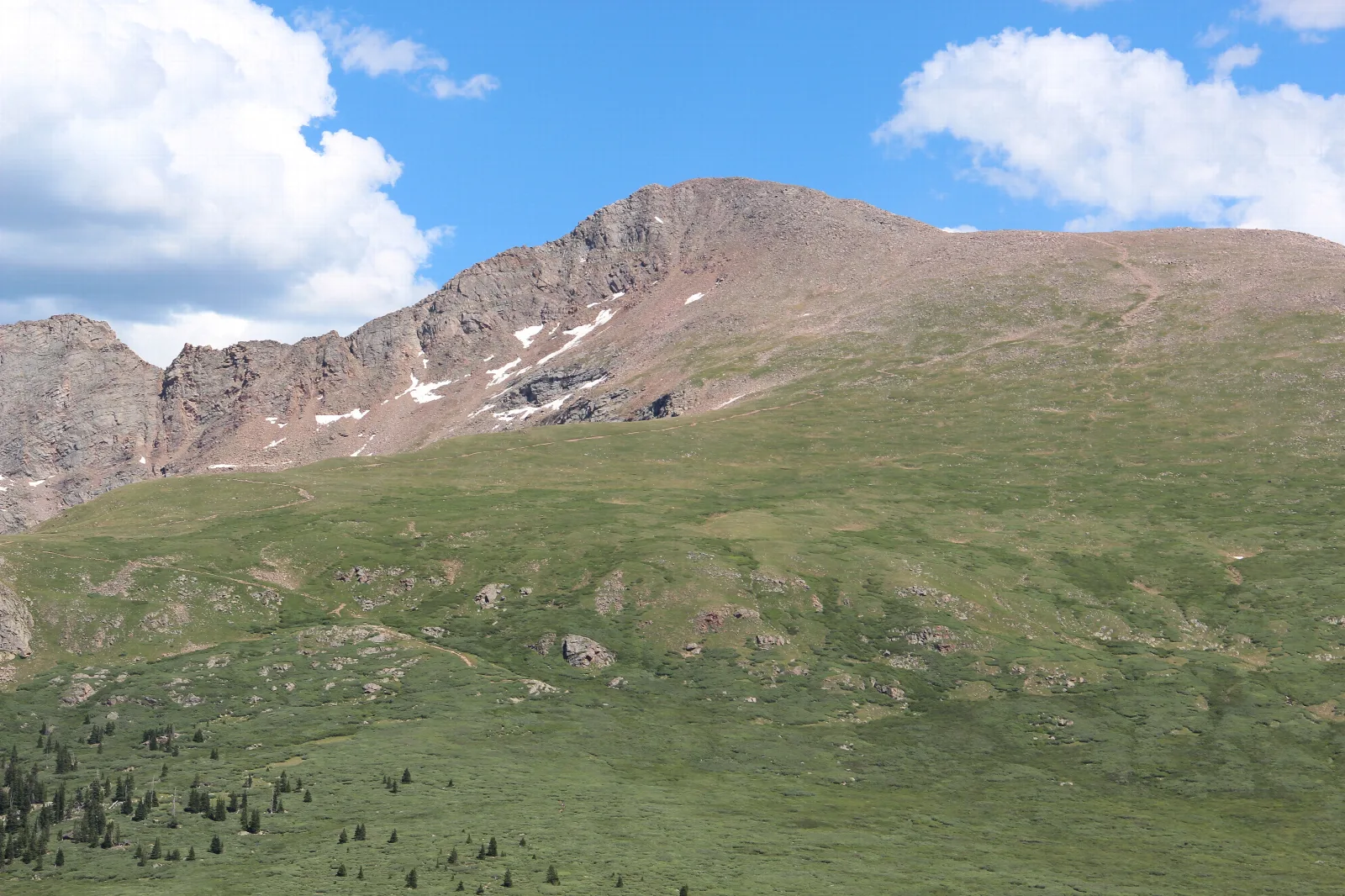
The west slopes. From the creek the trail climbs, and it keeps climbing. Long switchbacks take you up the west slopes on open tundra. There are no trees and no shade from here to the top.
The last stretch. Near the summit the trail gets steeper and rockier. The Forest Service describes it as "steeper and less well defined on the rocky ridge," so slow down and pick your line.
The summit. The Forest Service lists the summit at 14,063 feet and the Colorado Fourteeners Initiative at 14,065. Look east. Mount Blue Sky is across the basin, and Frozen Lake and Abyss Lake sit below you.
How far it is
On the OpenStreetMap line we used for the video, it's 3.7 miles from the trailhead to the summit, with about 2,570 feet of climbing on the way up. The Forest Service lists the trail at 3.6 miles one way. Remember the willows on the way back: the hike ends with a climb of about 180 feet back up to the trailhead.
Parking
Park in the trailhead lot. Guanella Pass Road is a county road, and the Forest Service says parking along it is not allowed.
Season
Clear Creek County closes Guanella Pass Road after Thanksgiving and reopens it around Memorial Day weekend. Check the county's Guanella Pass page before you drive up late in the year.
The tundra
Everything above the willows is alpine tundra, and it's fragile. Both the Colorado Fourteeners Initiative and the Forest Service ask you to stay on the trail and not cut the switchbacks.
The short version
- Start: Guanella Pass, about 11,670 feet. Free wilderness permit at the trailhead.
- First mile: down about 180 feet through the willows, over the boardwalks, across Scott Gomer Creek.
- Then: long switchbacks up the west slopes on open tundra, no trees.
- Last stretch: steeper and rockier, and the trail fades on the rocky ridge.
- Summit: just over 14,000 feet, with Mount Blue Sky across the basin.
- Distance: 3.7 miles one way and about 2,570 feet of climbing on the way up, by our measurement.
- Parking: the trailhead lot only.
Before you go
- How to choose the right trail difficulty, if this is your first 14er.
- Planning your first multi-day backpacking trip. The same planning works for a long summit day.
- Leave No Trace, in one minute. Stay on the trail above the willows.
Looking for more? Browse Colorado trails on Outdoors or open the Near Me view if you're already in the state.
If you liked this peak
- Quandary Peak, the other busiest 14er
- Mount Blue Sky, across the basin
- Grays and Torreys, the Front Range double
- Mount Sherman
Image credits
Lead image: Mount Bierstadt seen from Guanella Pass, July 2016, by Thomson200, CC0 (public domain dedication), via Wikimedia Commons.