Mount Sherman: The gentlest 14er in Colorado
Mount Sherman has the smallest elevation gain of any standard 14er route in Colorado. The trail starts at an old mining road at 12,000 feet and tops out 2,100 feet later — making it the most-recommended introductory peak in the state.

Mount Sherman is the gentlest fourteener in Colorado. The standard route is just 5.25 miles round-trip with about 2,100 feet of elevation gain — the smallest gain of any standard 14er trail in the state. The trailhead at Iowa Gulch sits above 12,000 feet, meaning the climb covers only the final 2,000 feet to the summit. For first-time 14er climbers, hikers acclimating for harder peaks, or anyone with limited time, Sherman is the most-recommended introduction in Colorado.
The peak at a glance
- Elevation: 14,043 ft (4,280 m)
- Rank in Colorado: 47th of 56 peaks above 14,000 ft
- Range: Mosquito Range
- County: Park County / Lake County
- Coordinates: 39.2249903° N, 106.1736° W
- Standard route: West Slopes from Iowa Gulch (Class 2) — 5.25 mi round-trip, ~2,100 ft gain
- Public land: Pike National Forest
How Mount Sherman got its name
The peak takes its name from General William Tecumseh Sherman, the Union general whose 1864 march through Georgia became one of the defining campaigns of the Civil War. The naming dates to the post-war silver-mining boom; mining-district records show the name in regular use by the 1880s, applied to a peak that anchored the prosperous Iowa Gulch and Sacramento Gulch silver districts.
The standard route
The standard West Slopes route starts from the Iowa Gulch trailhead, accessed by a passenger-car-friendly Forest Service road from Leadville. The trail follows an old mining road past the historic Hilltop Mine and ascends the broad west ridge to the summit on a Class 2 line. The footing is mostly stable talus with intermittent loose stretches near the false summit.
Plan on 4 to 6 hours car-to-car — among the shortest 14er days in Colorado.
When to climb
The Colorado fourteener climbing season is short. The standard window runs from late June through mid-September — after the snow has melted off the trail and before the first serious autumn storm. Outside that window, you're committing to a winter ascent: snow travel, avalanche assessment, post-holing through drifts, and route-finding without a visible trail.
Inside the window, the rule that has saved more Colorado lives than any other is be off the summit by noon. Afternoon convective storms build over the high peaks almost daily in July and August. Lightning is the leading weather killer in the Rockies. Plan for a pre-dawn start — most experienced climbers leave the trailhead between 4:00 and 5:30 AM.
Where it sits
What climbers wish they'd known
The mining ruins are real and unstable. The old Hilltop Mine structures along the route are historic; do not climb on them. Mine shafts in the area are open and dangerous.
It is still a 14,000-foot peak. Sherman is gentle, not trivial. Altitude is altitude. Plan for weather, water, and the same lightning rules that apply on every Colorado high peak.
Before you go
A 14er is a long, exposed day at altitude. Read these first if you haven't already:
- Planning your first multi-day backpacking trip — same logistics apply to a long single-day summit push.
- How to choose the right trail difficulty — converting class ratings into honest fitness estimates.
- Leave No Trace, in one minute — alpine tundra heals on a geological clock. Stay on the trail.
Looking for the standard route on the map? Browse Colorado trails on Outdoors or jump to the Near Me view if you're already in-state.
If you liked this peak
- Mount Bierstadt — the next-step Front Range entry 14er
- Quandary Peak — the popular Tenmile beginner
- Mount Democrat — the Mosquito Range entry to the DeCaLiBron loop
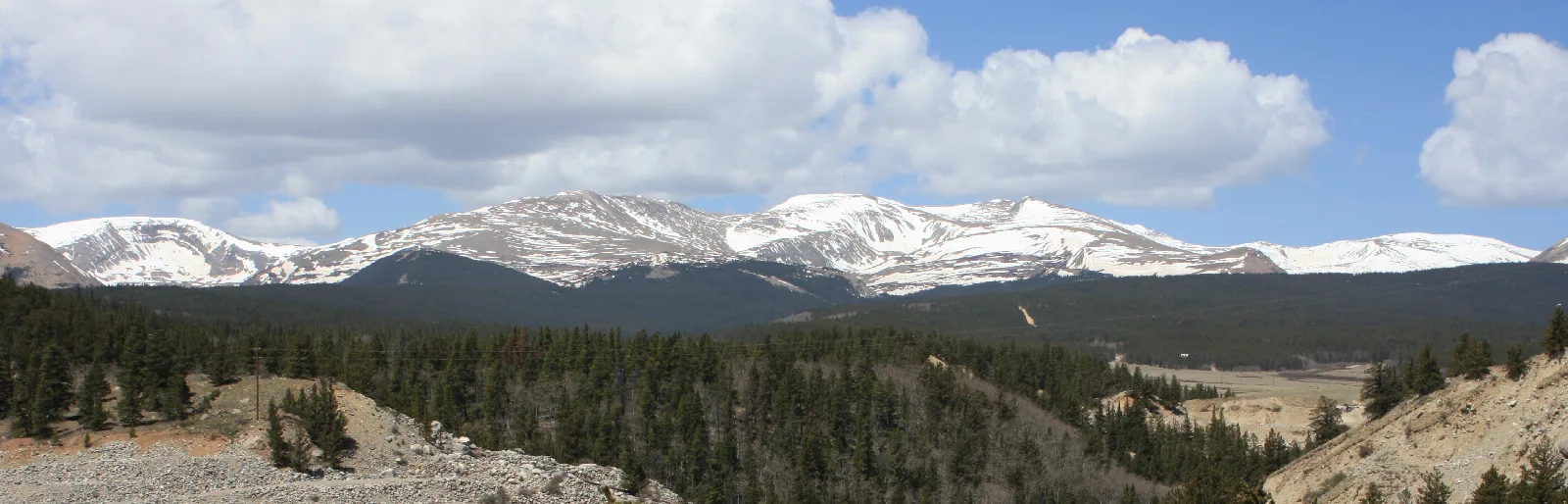
Hero photograph: Mount Sherman rises above the Mosquito Range, central Colorado. by David Herrera, licensed under CC BY 2.0.