Longs Peak: The Keyhole Route and the most serious "standard" 14er in Colorado
Longs Peak is 14,259 feet of attitude in Rocky Mountain National Park. The Keyhole Route is the standard line, and it has killed more people than any other standard route on any Colorado 14er. Y'all do not show up here casual.

Longs Peak is the only fourteener in Rocky Mountain National Park, and y'all, it is not the friendly kind. The standard route is fourteen and a half miles, gains 5,100 feet, and asks you to cross six named features on the way to the top — the Boulder Field, the Keyhole, the Ledges, the Trough, the Narrows, and the Homestretch. The first three are walking. The last three are exposed Class 3 scrambling on a route that is "in" for about three months a year. The other nine months it's a winter mountaineering objective dressed up like a hiking trail.
Longs has the highest fatality count of any standard 14er route in Colorado — sixty-plus deaths since the Park Service started keeping records, the majority from falls on the upper Class 3. It is also one of the most beautiful climbs on this continent and arguably the most iconic skyline north of Pikes Peak. Both of those things are true on the same morning, and the people who get up Longs safely are the ones who treat that fact with respect.
The peak at a glance
- Elevation: 14,259 ft (4,346 m)
- Rank in Colorado: 15th of 56 peaks above 14,000 ft
- Range: Front Range
- County: Boulder County
- Coordinates: 40.2549° N, 105.6160° W
- Standard route: Keyhole Route (Class 3) — 14.5 mi round-trip, ~5,100 ft gain
- Public land: Rocky Mountain National Park
How Longs Peak got its name
The peak takes its name from Major Stephen Harriman Long, who led the 1820 federal expedition that gave us the first written reports of the southern Rockies. Long's crew never set foot on it — the same expedition that put Edwin James on top of Pikes Peak only ever saw Longs from a hundred miles out on the Plains. They sketched it, named it, and kept moving.
The first recorded ascent came almost fifty years later. On August 23, 1868, a party led by John Wesley Powell — the one-armed Civil War major who, the very next year, would run the first descent of the Grand Canyon — got to the summit by way of the south side. Powell's brother Walter and the Rocky Mountain News editor William Byers were on that rope. Heck of a crew. They were almost certainly not the first humans on top; Arapaho oral history places hunters on the summit well before, probably by the lines that later became the Loft and Keplinger's Couloir. The "first ascents" of Colorado peaks are rarely the actual first ascents, and Longs is one of the cleaner examples of that.
The standard route
The Keyhole Route starts at the Longs Peak Ranger Station off Highway 7. The first six miles are a beautiful, runnable trail through subalpine forest and tundra up to the Boulder Field at 12,800 feet. That's the moment the day actually begins. Some folks bivvy here in the permitted backcountry sites and split the climb in two. Most blast through on an alpine start because the parking lot fills before midnight.
From the Boulder Field, you climb to the Keyhole — a notch at 13,150 feet that frames Glacier Gorge like the back door to a different mountain — then traverse the Ledges (exposed Class 3), grunt up the Trough (a 600-foot, kitty-litter couloir that is the slowest part of the day), tiptoe across the Narrows (a knee-knocking ledge with hundreds of feet of air below), and finish on the Homestretch, a 300-foot slabby Class 3 ramp that delivers you to a flat, football-field summit. The Keyhole-to-summit segment is about a mile and a half. Two to four hours up. Solid footing, weather discipline, and the willingness to bail are non-negotiable.
Total round-trip: 14.5 miles, 5,100 feet of gain, 12 to 16 hours car-to-car. The successful days start between 1:00 and 3:00 AM. The unsuccessful ones start later than that.
Other ways up
Longs has options for climbers who want more than the Keyhole:
- The Loft (south face traverse to Mount Meeker): A more exposed Class 3 alternative that bypasses the upper-mountain congestion. Adds technical difficulty and a route-finding crux at Clark's Arrow.
- Keplinger's Couloir: The line Powell's party used in 1868. Long, loose, and almost never climbed today — but historically the OG.
- The Diamond: The 1,000-foot vertical east face. One of America's classic alpine big walls. Multi-pitch trad lines from 5.10 to 5.12+, summer only, partners and a real rack required. Heck of a climb.
- Cables Route (winter / north face): The old steel cables are gone, but the eyebolts remain. A Class 3-4 line that becomes a legit mountaineering objective in winter.
The Keyhole is the right answer for anyone comfortable with sustained Class 3 exposure. Anything else on Longs is a step toward real mountaineering.
When to climb
The Keyhole Route is "in" only when the upper sections are dry — usually mid-July to mid-September. Outside that window, the route flips to a winter mountaineering objective that needs crampons, an ice axe, and the experience to use them on exposed Class 3. The Park Service posts the official "in technical conditions" status at the trailhead and online; if you see that posted, treat the Keyhole as a different climb than the summer line.
The "off the summit by noon" rule is non-negotiable here. Convective storms that build over the Front Range hit Longs first and hardest. Lightning is the number-one cause of summit-day evacuations and a few of those sixty fatalities.
Where it sits
Longs sits at the southern end of Rocky Mountain National Park, about fifteen miles south of Estes Park. The trailhead — the Longs Peak Ranger Station off Highway 7 — has a small day-use lot that fills before midnight on summer weekends. The park does not require timed-entry permits for the Longs Peak corridor as of the 2026 season, but the parking is the actual bottleneck. If you roll up at 4:00 AM in July you are parking on the shoulder a mile down the road and adding two miles to your day.
What climbers wish they'd known
If you can't see the Diamond from the trailhead, you're not climbing. The Front Range catches more cloud and lightning than the Sawatch. If the upper face is socked in at 5:00 AM, the day is already over. Turn back at the Boulder Field with your dignity intact and come back next weekend.
The Narrows is where people fall. Most Longs fatalities happen on the Narrows or the Homestretch on the way down, when fatigue compounds wet rock or verglas. Down-climb the technical sections like you're being graded on it. There's no rush worth a Flight For Life.
Bivvy at the Boulder Field if you can score the permit. Permitted backcountry camping splits the day, drops six miles off the summit push, and lets you climb the technical section in good morning light. It is the single biggest difference-maker on this peak.
Before you go
A 14er is a long, exposed day at altitude. Read these first if you haven't already:
- Planning your first multi-day backpacking trip — same logistics apply to a long single-day summit push.
- How to choose the right trail difficulty — converting class ratings into honest fitness estimates.
- Leave No Trace, in one minute — alpine tundra heals on a geological clock. Stay on the trail.
Looking for the standard route on the map? Browse Colorado trails on Outdoors or jump to the Near Me view if you're already in-state.
If you liked this peak
- Mount Bierstadt — the Front Range walk-up
- Pikes Peak — the Front Range's most-visited summit
- Mount Blue Sky — the renamed Front Range giant
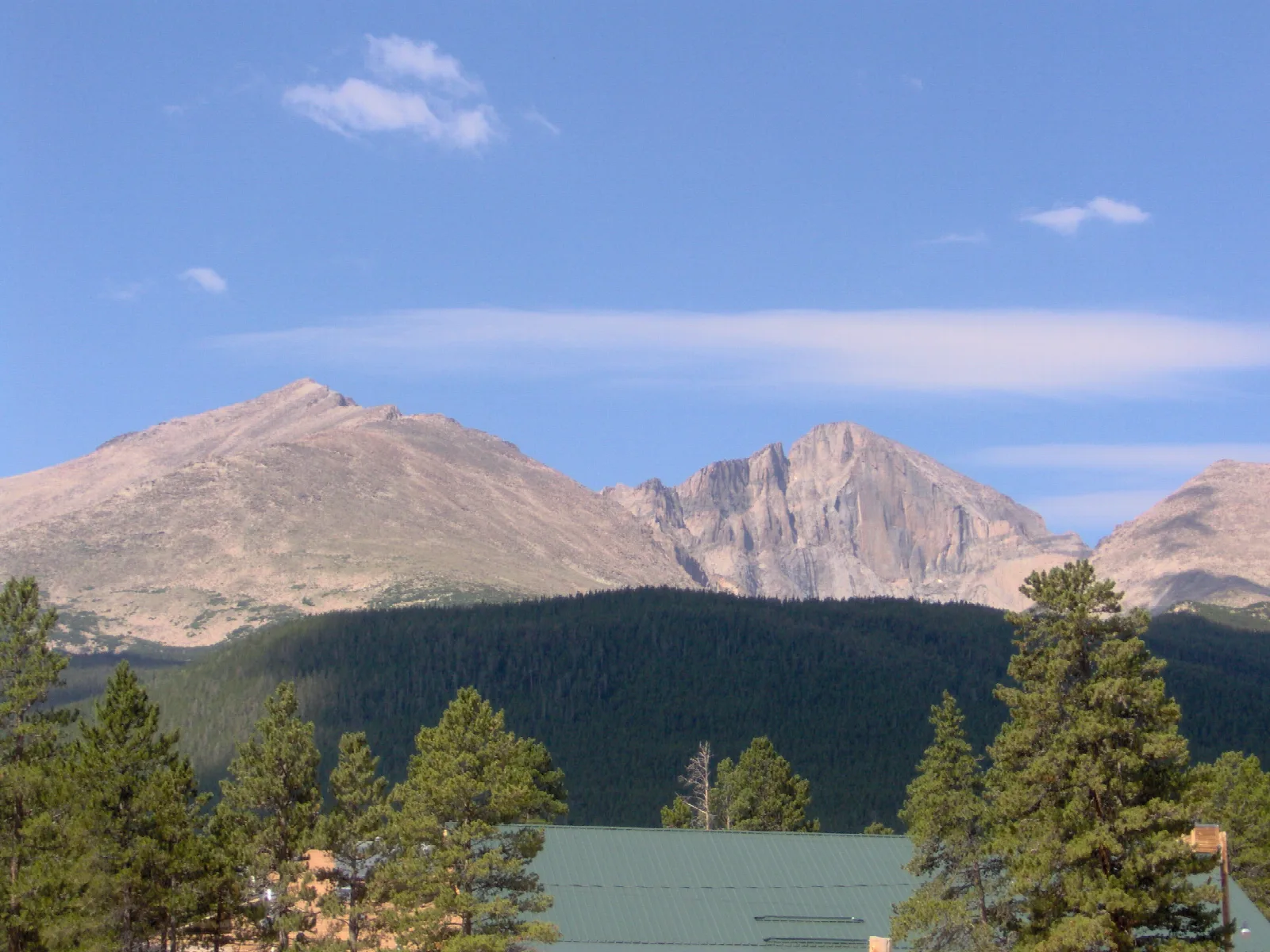
Hero photograph: Longs Peak and Mount Meeker viewed from State Highway 7 near Estes Park, Colorado. by Nyttend, licensed under Public domain.