Wonderland Trail Permits: How to Win a Lap Around Rainier
About 600 reserved Wonderland Trail circuits exist each summer, and the lottery that allocates them closes in early March. How the system actually works, what the walk-up third is, and why the 93-mile loop around Rainier is worth the paperwork.

The hikers came in on the train to Ashford, hauled their gear off the platform, and started walking toward the Nisqually entrance of Mount Rainier National Park. It was August 1915. The trail they had come to attempt — one continuous footpath around the entire mountain — had only just been finished. Park crews had worked overtime that spring and summer because Stephen Mather, then Assistant Secretary of the Interior, wanted it done before the Mountaineers club's annual outing. That trip became the first recorded circuit of Rainier on the trail we now call the Wonderland.
The mountain has not changed much since. The line to walk around it has — it now forms in February, on a website.
Wonderland by the numbers that matter
- Loop length: about 93 miles, entirely within Mount Rainier National Park
- Climbing per lap: roughly 27,000 feet of gain and 27,000 feet of loss (current NPS figure)
- Camps: 18 trailside wilderness camps (plus 3 non-wilderness) — designated sites only
- Reserved circuits per summer: about 600, July through September
- Walk-up permits: roughly 300 more, issued first-come, first-served
- Lottery window: applications mid-February to early March on Recreation.gov
- High point / low point: Panhandle Gap, 6,750 ft / Ipsut Creek, 2,320 ft
- Typical trip: 10 to 14 days
How the Wonderland Trail lottery works
Applications for Mount Rainier's early-access lottery open on Recreation.gov in mid-February and close in early March. Winners receive timed reservation windows through March and April, and whatever inventory remains goes on general sale April 25.
That calendar matters more than any gear decision you will make. Midsummer readers, take the long view: this season's drawing wrapped months ago, and the itineraries went with it. What you are really planning is next year's trip. A Wonderland hike begins in February.
The demand math explains why. The park says the summer season holds capacity for only about 600 reserved full-circuit trips between July and September. Since the online request form arrived in 2017, more than 5,000 requests for Wonderland, climbing, and other backcountry trips have landed in the first two weeks alone, and the park expects roughly half of early requests to be for the full loop. The lottery grants up to 1,800 applicants a timed window, so a win only buys you a place in line — you still build your itinerary camp by camp from whatever is left when your turn comes. The details shift year to year; the park's wilderness permit page is the only version worth trusting.
Ninety-three miles that never leave the mountain
The Wonderland is a closed loop, about 93 miles around, and it never leaves Rainier. That sounds gentler than it is. The Park Service currently puts the climbing at about 27,000 feet of gain per lap, with the same again in loss — higher than the 22,000-foot figure most guidebooks still quote — because the route spends its whole life crossing the ridges that radiate off the volcano and dropping into the river valleys between them. The high point is Panhandle Gap at 6,750 feet. The low point, Ipsut Creek, sits at 2,320. You ride that gradient from old-growth forest to subalpine meadow and back, over and over, for a week and a half.
Camps are the logistics. Full-circuit hikers may stay only in designated camps — eighteen trailside wilderness camps, plus three non-wilderness ones — so the itinerary you win in the lottery is the trip: every night assigned before you take a step. Resupply follows the same fixed geometry: hikers mail or drop plastic buckets of food at the Longmire wilderness information center and the White River Campground and walk between them. Check the park's caching page before counting on Mowich Lake, where a bridge closure has cut road access. You can trace the whole circuit, camp gaps and all, on the Wonderland Trail page.
The red line on the map below does the thing no other famous American trail does: it closes. The dot climbs, drops, and swings through every aspect of the mountain, then ends exactly where it started, never once leaving Rainier's flanks.
No lottery win? The walk-up third
About one third of the park's wilderness campsites are never released for reservation. They are issued first-come, first-served, in person, at the park's wilderness information centers — no phone, no website, no shortcut.
In practice that means roughly 300 walk-up permits go out every summer to people who showed up with flexible dates, took whatever start point a ranger could string together, and were willing to hike the loop in either direction. It is a real path onto the trail, and it rewards exactly the hiker the lottery frustrates: the one who can leave on a Tuesday.
How many days does the Wonderland Trail take?
Most hikers take 10 to 14 days. Across 93 miles that works out to roughly seven to nine miles a day, which sounds leisurely until you attach the elevation profile to it.
Strong backpackers read those numbers and assume they will go faster. Some do. But the permit sets the schedule, and the camps are not evenly spaced — the 7-mile day out of White River gains 2,300 feet on its way to Summerland, fresh legs or not. Build the itinerary you can hike on your worst day, because you will be living with it every night for two weeks.
When is the loop snow-free?
Typically from mid-July into October. In an average snow year the park advises against starting before mid- to late July.
That compresses the season into roughly twelve weeks, which is the other half of the permit crunch: 600 reserved circuits stops sounding stingy only until you divide it by the weeks the high country is actually open. Direction is yours to choose. The park publishes its camp-to-camp tables clockwise from Longmire, but the loop reads well either way, and walk-up hikers in particular should stay agnostic about it.
Before February comes back around
The Wonderland is the sixth trail in this series on America's great long walks, and the only one that ends exactly where it began. Its lottery has company all over the mountains now — even Quandary Peak, a Colorado dayhike, wants a reservation — and for another national-park mountain that punishes casual planning, see Longs Peak's Keyhole Route. If this would be your first trip longer than a weekend, read planning your first multi-day backpacking trip before you enter any lotteries at all.
Shakedown hikes win Wonderland itineraries. Build yours from the trail maps on Outdoors.
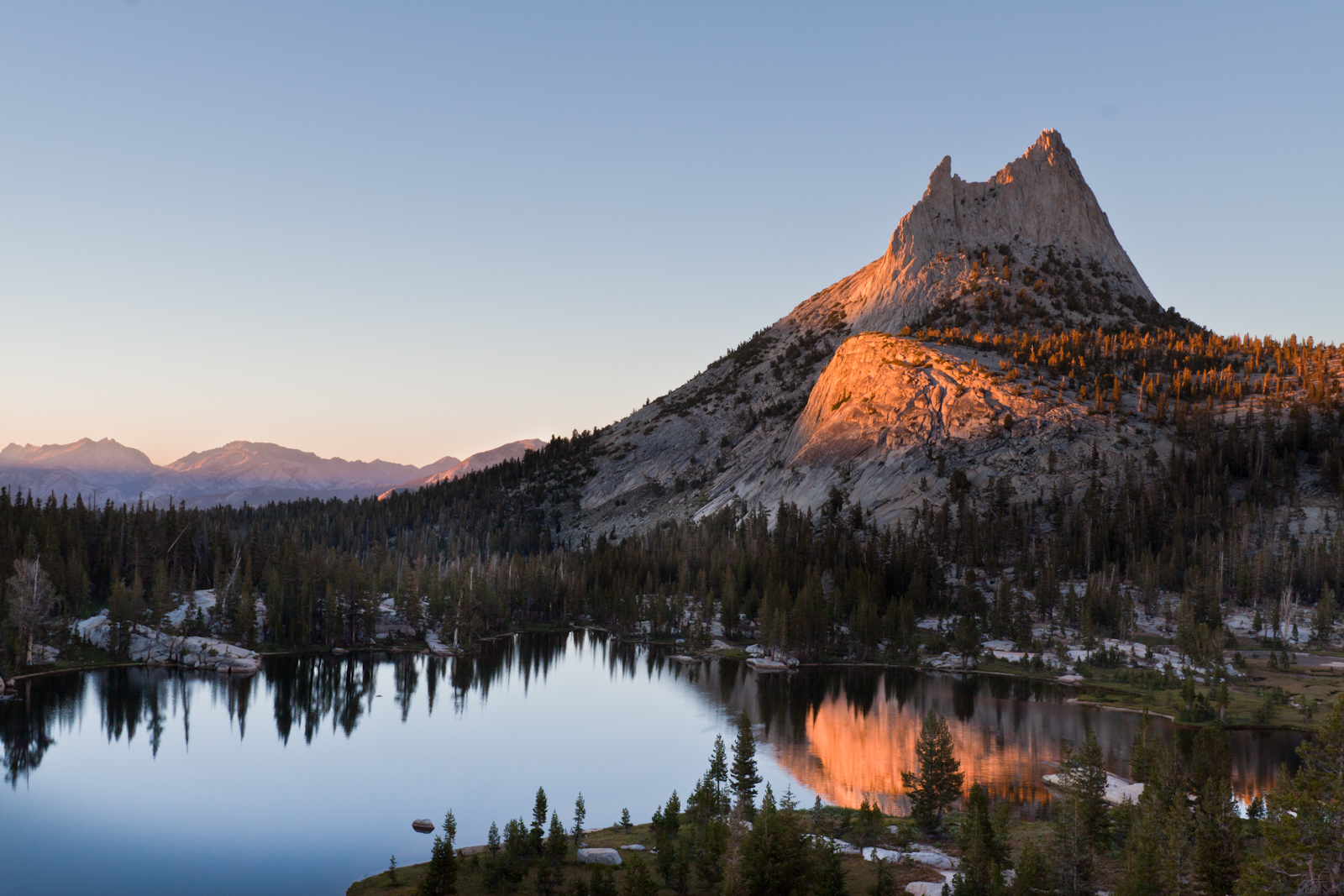
Hero photograph: Aurora Lake in Klapatche Park along the Wonderland Trail, with views of Mount Rainier. NPS photo, public domain, via Wikimedia Commons.
Sources
Hero photograph: Aurora Lake in Klapatche Park, on the western leg of the Wonderland Trail, with Mount Rainier behind. by NPS Photo (National Park Service), licensed under Public domain (work of a U.S. National Park Service employee).