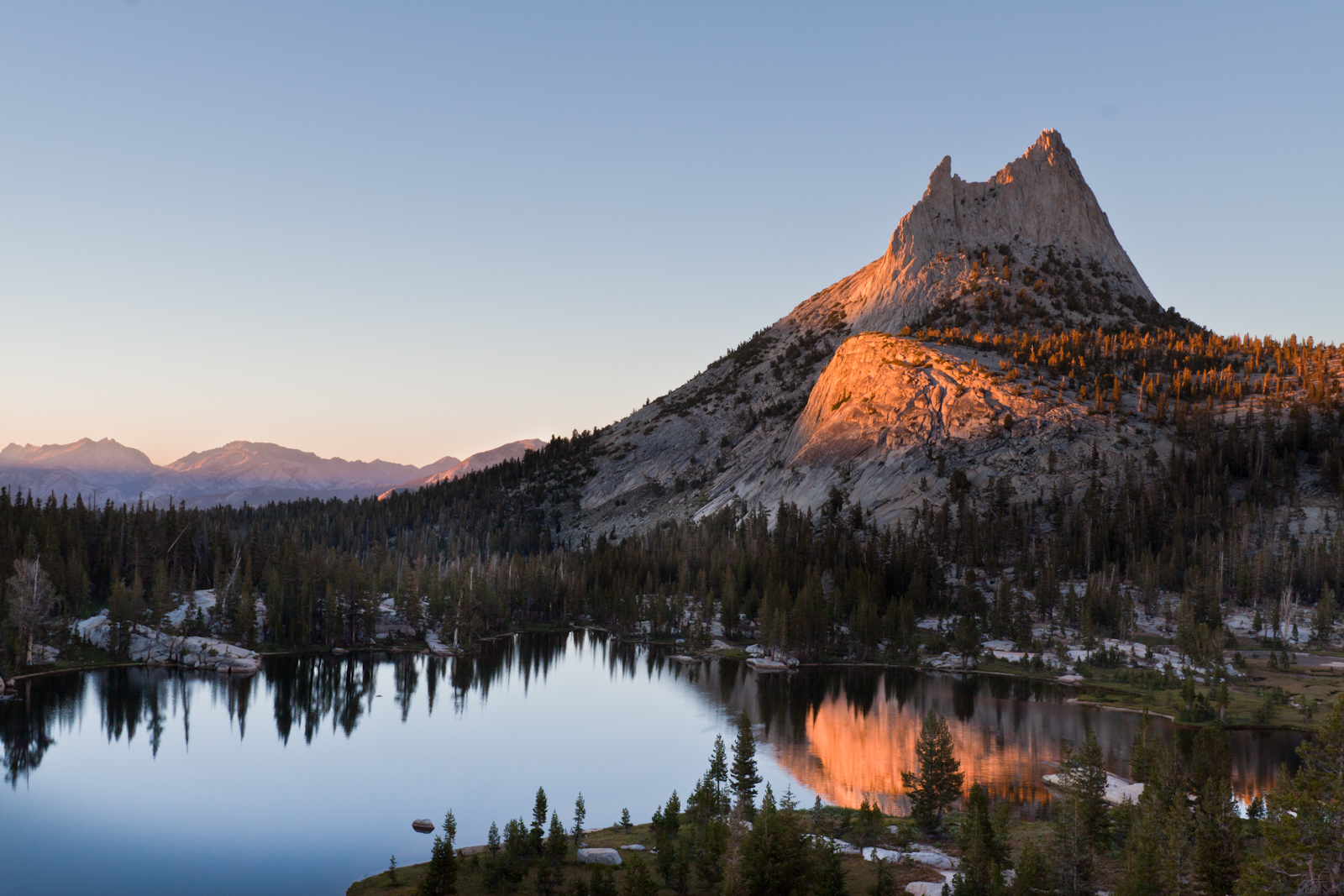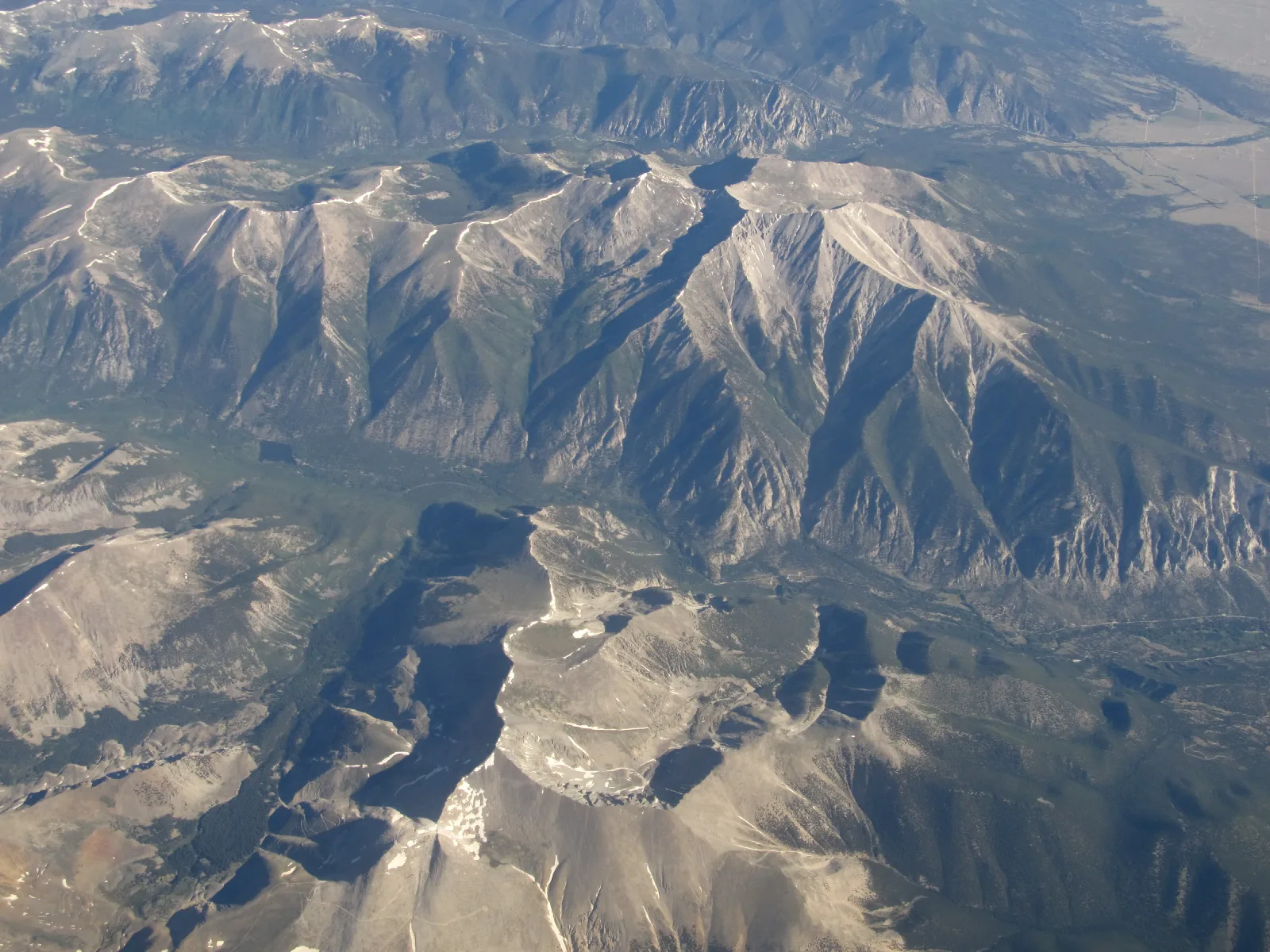
Mount Princeton: The Collegiate Peaks' southern showpiece
Mount Princeton rises straight out of the Arkansas River valley above Buena Vista — a clean, photogenic east-face triangle that defines the southern end of the Collegiate Peaks.

Mount Princeton is the photogenic anchor of the southern Collegiate Peaks — a clean, near-perfect triangle of granite that rises straight from the Arkansas River valley above Buena Vista. Of all the Collegiate Peaks, Princeton has the most dramatic prominence as seen from the valley floor: a 7,000-foot relief from the river to the summit, with no significant intervening foothills.
The peak is also the only 14er with hot springs at its base — the Mount Princeton Hot Springs Resort sits at the trailhead access road, and the post-climb soak is a standard local ritual.
The peak at a glance
- Elevation: 14,204 ft (4,329 m)
- Rank in Colorado: 19th of 56 peaks above 14,000 ft
- Range: Sawatch Range — Collegiate Peaks
- County: Chaffee County
- Coordinates: 38.7492° N, 106.2425° W
- Standard route: East Slopes via Princeton Road (Class 2) — 13 mi round-trip from passenger-car parking, ~5,400 ft gain
- Public land: San Isabel National Forest
How Mount Princeton got its name
Named in 1869 by the same Whitney Expedition that named Mount Harvard — the Collegiate Peaks naming theme. Princeton was added shortly after Harvard and Yale in the survey, completing the early Ivy-League trio. Mount Yale sits two summits north; Mount Columbia sits east.
The standard route
The standard East Slopes route ascends an old radio-tower road from Buena Vista. With high-clearance 4WD, climbers reach about 11,800 feet on the road. Without it, the climb starts at the lower trailhead and adds 6 miles round-trip on the road. From the upper road end, the route is a sustained Class 2 walk on solid talus to the summit ridge.
Total round trip varies dramatically by vehicle: 6.5 miles from upper 4WD trailhead, 13 miles from passenger-car parking. Plan accordingly.
When to climb
The Colorado fourteener climbing season is short. The standard window runs from late June through mid-September — after the snow has melted off the trail and before the first serious autumn storm. Outside that window, you're committing to a winter ascent: snow travel, avalanche assessment, post-holing through drifts, and route-finding without a visible trail.
Inside the window, the rule that has saved more Colorado lives than any other is be off the summit by noon. Afternoon convective storms build over the high peaks almost daily in July and August. Lightning is the leading weather killer in the Rockies. Plan for a pre-dawn start — most experienced climbers leave the trailhead between 4:00 and 5:30 AM.
Where it sits
What climbers wish they'd known
The hot springs are real. Mount Princeton Hot Springs Resort at the base of the road is a standard post-climb destination. The day-pass to the soak is among the better post-14er traditions in Colorado.
Before you go
A 14er is a long, exposed day at altitude. Read these first if you haven't already:
- Planning your first multi-day backpacking trip — same logistics apply to a long single-day summit push.
- How to choose the right trail difficulty — converting class ratings into honest fitness estimates.
- Leave No Trace, in one minute — alpine tundra heals on a geological clock. Stay on the trail.
Looking for the standard route on the map? Browse Colorado trails on Outdoors or jump to the Near Me view if you're already in-state.
If you liked this peak
- Mount Yale — the next Collegiate north
- Mount Harvard — the Collegiate high point
- Mount Antero — the aquamarine peak
Hero photograph: Mount Princeton in the Collegiate Peaks of the Sawatch Range, Colorado. by Ken Lund, licensed under CC BY-SA 2.0.