Crestone Peak: The Sangres' rough-rock crown, and the best-gripping conglomerate on any Colorado 14er
Y'all, Crestone Peak rises 14,300 feet out of the Sangre de Cristos on a ridge of Precambrian conglomerate that grips your boots like sandpaper. Heck of a different climbing experience than Maroon Formation peaks. The standard South Face Class 3 route is one of the great days in the state.

The Sangre de Cristos run for 75 miles on a thin north-south spine south of Salida — a narrow range with five 14ers stacked on a single connected ridge. The highest of those, Crestone Peak, is built out of an unusual rock: a Precambrian conglomerate of cobblestones welded into a sandstone matrix, weathered by alpine cycles into the roughest, most positively-grippy rock surface on any Colorado 14er. Y'all, where Maroon Peak's mudstone pulls off in your hand, Crestone's conglomerate sticks like sandpaper under your boots. It completely changes how the climbing feels.
The peak is also one of four sacred mountains in regional Indigenous traditions — Crestone forms part of a four-corner sacred axis that holds cultural significance to multiple Pueblo, Apache, and Diné (Navajo) traditions. Worth knowing on your way up.
The peak at a glance
- Elevation: 14,300 ft (4,359 m)
- Rank in Colorado: 7th of 56 peaks above 14,000 ft
- Range: Sangre de Cristo Range
- County: Saguache County / Custer County
- Coordinates: 37.9667° N, 105.5853° W
- Standard route: South Face from Cottonwood Lake (Class 3) — 14 mi round-trip, ~5,500 ft gain
- Public land: Sangre de Cristo Wilderness, Rio Grande National Forest
How Crestone Peak got its name
"Crestone" comes from the Spanish for cock's comb or crest — applied to the prominent ridgeline this peak forms with neighboring Crestone Needle. The two peaks make an unmistakable jagged crest visible from way out across the San Luis Valley. The Spanish name shows up on colonial-era maps.
The Hayden Survey of 1874 kept the existing name when it added the peak to its catalog. A subsidiary point on the connecting ridge — the "Bears Playground" — gives the high traverse its name.
The standard route
The South Face route is the standard. From the South Colony Lakes trailhead — up a rough 4WD road from Westcliffe — the trail climbs into the upper South Colony basin, traverses west across the saddle below Humboldt, and approaches the peak from the south side. The summit pitch climbs a 1,000-foot Class 3 couloir straight through the conglomerate face. The rock is positive, the route-finding is straightforward, and the exposure is moderate. Heck of a clean climb.
Total round trip is about 14 miles with 5,500 feet of gain. Plan on 11 to 14 hours car-to-car, or break it across two days with a bivvy at the lakes. Y'all, take the bivvy if you can swing it.
Other ways up
The classic linkup is the Crestone Traverse from Crestone Peak to Crestone Needle. About half a mile of exposed Class 5.0 ridge climbing on the best-quality scrambling rock on any Colorado 14er. Most parties bivvy at South Colony Lakes and either climb both peaks across two days or hit the traverse as one big push. Heck of a route either way.
The North Buttress is a serious technical climb (Class 5.7+) and one of the great alpine rock routes in Colorado for parties carrying a real rack.
When to climb
The Colorado fourteener climbing season is short. The standard window runs from late June through mid-September — after the snow has melted off the trail and before the first serious autumn storm. Outside that window, you're committing to a winter ascent: snow travel, avalanche assessment, post-holing through drifts, and route-finding without a visible trail.
Inside the window, the rule that has saved more Colorado lives than any other is be off the summit by noon. Afternoon convective storms build over the high peaks almost daily in July and August. Lightning is the leading weather killer in the Rockies. Plan for a pre-dawn start — most experienced climbers leave the trailhead between 4:00 and 5:30 AM.
Where it sits
The peak sits inside the Sangre de Cristo Wilderness, accessed from the east through the Wet Mountain Valley town of Westcliffe and from the west via the town of Crestone. South Colony Lakes is the standard staging area — a pair of subalpine lakes at 11,800 feet. The trailhead road is a rough 4WD route; a lot of parties park lower and walk the extra 2 miles each way. Either way it's a heck of a wilderness setting.
What climbers wish they'd known
The conglomerate is the magic. Y'all, the grip on Crestone's rock is unlike any other 14er. Climbers who get sketched out by Maroon Formation peaks often find the Crestones psychologically easier despite the higher technical grade. Trust your boots.
The 4WD road eats time. The South Colony Lakes road needs real high-clearance 4WD and gets closed by fallen trees in shoulder season. Most parties end up parking at the lower trailhead and walking the 2 miles — adds about an hour each way. Plan for it.
Before you go
A 14er is a long, exposed day at altitude. Read these first if you haven't already:
- Planning your first multi-day backpacking trip — same logistics apply to a long single-day summit push.
- How to choose the right trail difficulty — converting class ratings into honest fitness estimates.
- Leave No Trace, in one minute — alpine tundra heals on a geological clock. Stay on the trail.
Looking for the standard route on the map? Browse Colorado trails on Outdoors or jump to the Near Me view if you're already in-state.
If you liked this peak
- Crestone Needle — the traverse partner
- Humboldt Peak — the Class 2 neighbor
- Kit Carson Peak — the Sangres' technical neighbor
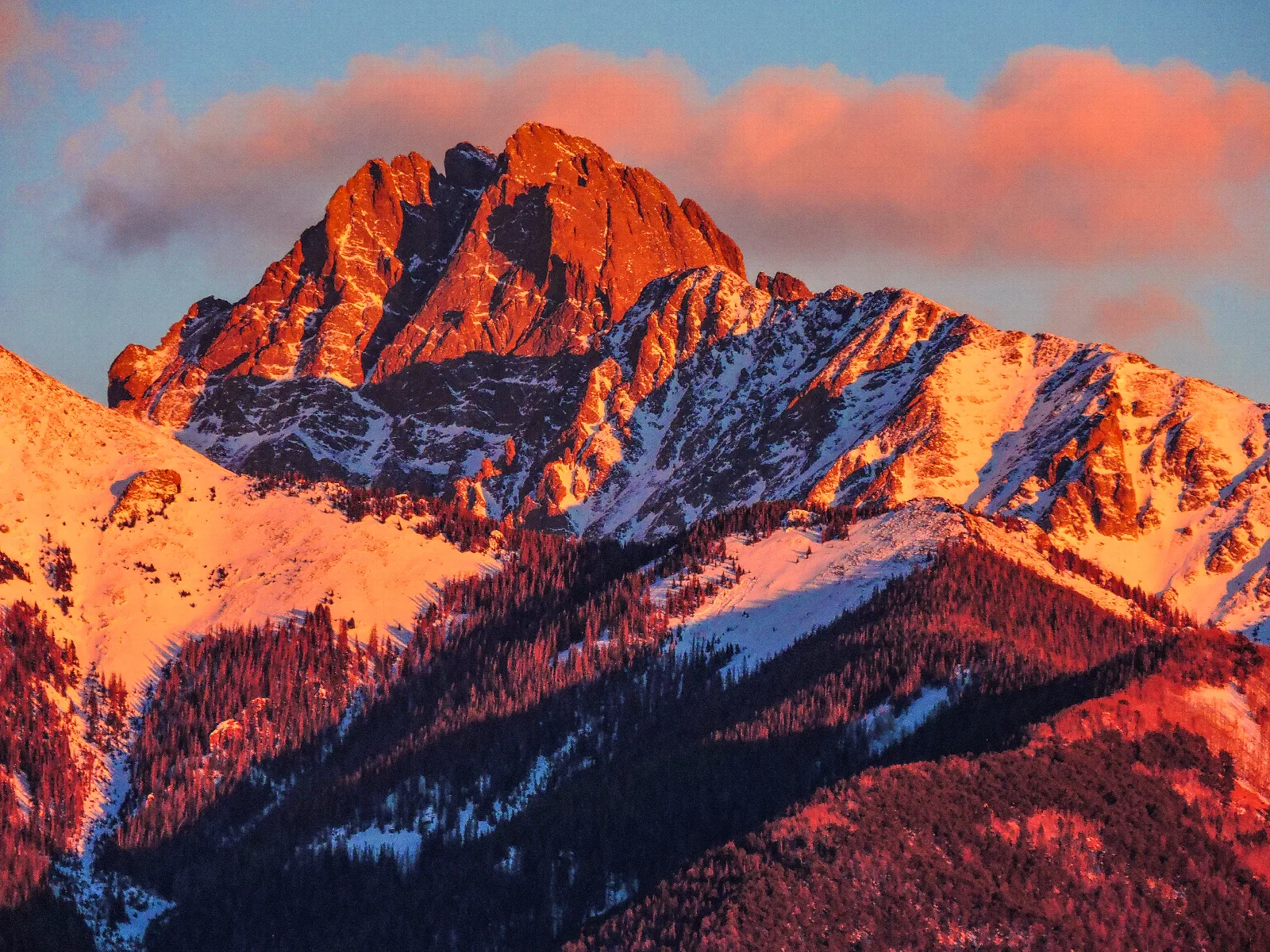
Hero photograph: Crestone Peak from the north side of Great Sand Dunes National Park, Sangre de Cristo Range, Colorado. by Patrick Myers / NPS, licensed under Public domain.