Maroon Peak: The Deadly Bells, and the most-photographed 14er in Colorado you should not climb casual
Maroon Peak is the south Bell of the Maroon Bells — arguably the most-photographed mountains in North America and absolutely among the most dangerous in the state. Y'all, that "Deadly Bells" sign at the trailhead is not decoration.

The Maroon Bells are arguably the most-photographed pair of mountains in North America. From the south side of Maroon Lake at sunrise, the twin peaks reflect into still water in a scene that's been reproduced on calendars, postcards, and every Colorado tourism asset for a hundred years. The image is so famous that the Forest Service had to put in timed-entry permits and a mandatory shuttle bus to manage the volume of folks coming to take it.
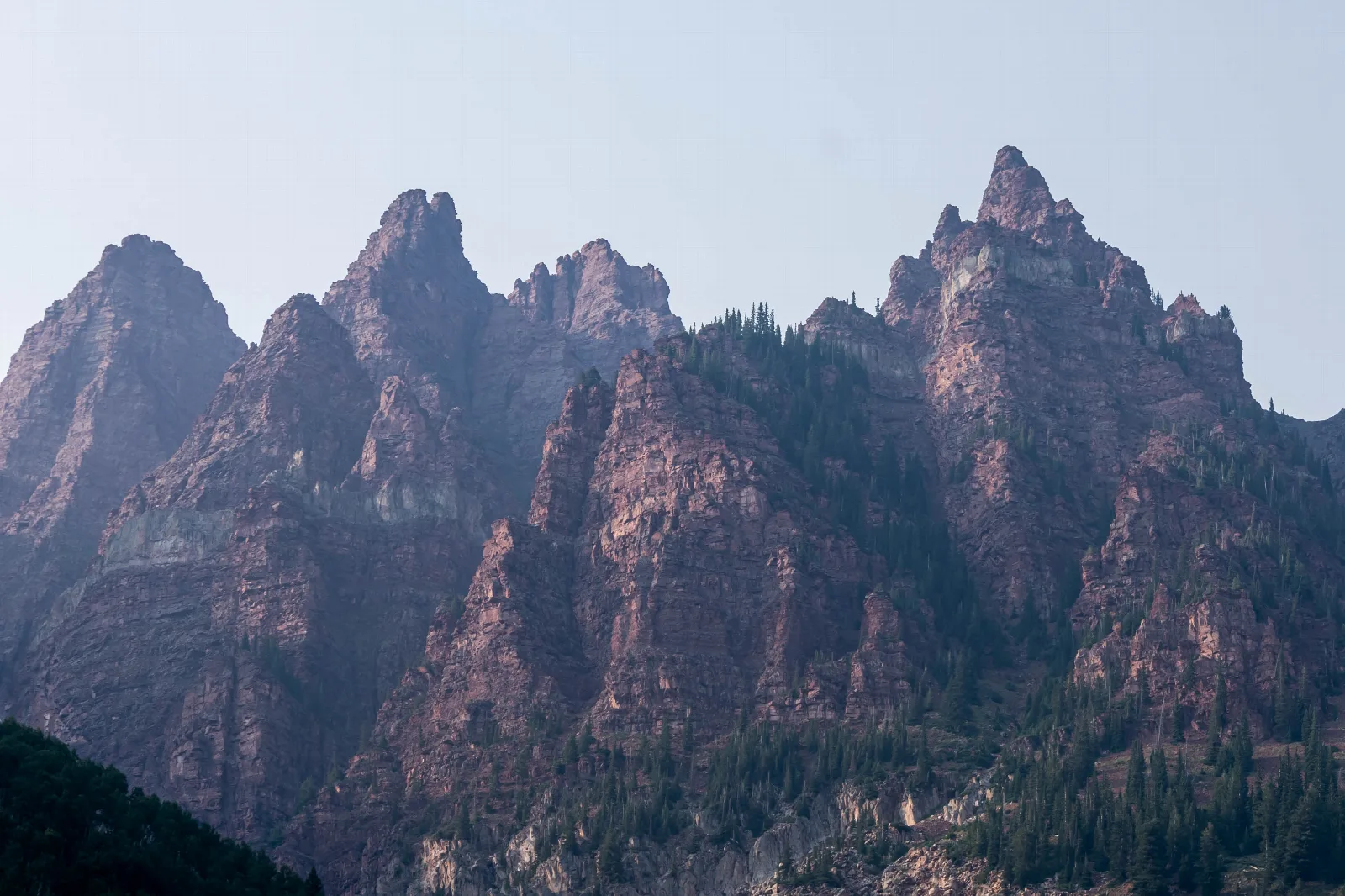
Y'all, behind the picture is a completely different mountain. The Bells are built out of a sedimentary unit called the Maroon Formation — a deep-red mudstone that weathers into rotten, loose, dinner-plate blocks that pull off the mountain when you weight them. The Forest Service installed a sign at the climbers' trailhead in the 1960s that warns: "The Bells are notoriously down-sloping, loose, rotten, and unstable... Don't be fooled." The sign is still there. The mountain has earned every word of it.
The peak at a glance
- Elevation: 14,163 ft (4,317 m)
- Rank in Colorado: 25th of 56 peaks above 14,000 ft
- Range: Elk Mountains
- County: Pitkin County
- Coordinates: 39.0708° N, 106.9892° W
- Standard route: South Ridge (Class 4) — 11.5 mi round-trip, ~4,800 ft gain
- Public land: Maroon Bells–Snowmass Wilderness, White River National Forest
How Maroon Peak got its name
The peaks take their name from the deep red color of the Maroon Formation — a Pennsylvanian-Permian red mudstone-and-sandstone unit laid down about 280 million years ago. The "Bells" part came later from the rounded silhouette as seen from below. The name "Maroon Bells" shows up in mining-district records by the 1880s.
The phrase "Deadly Bells" is more recent. It traces back to a particularly grim 1965 season in which eight climbers died on these peaks — the year that prompted the Forest Service to put the warning sign at the trailhead. The sign has stood there ever since for a reason.
The standard route
The standard line on Maroon Peak is the South Ridge — Class 4 up the south face from Crater Lake. Round trip is about 11.5 miles with 4,800 feet of gain. The route is sustained loose-rock scrambling on terrain where a lot of the holds are not fixed to the mountain. Helmet is non-negotiable. Climbers below you will knock rock loose. You will too. Stagger your start so you're not on top of another party, and y'all, this is not the day to underprepare.
Plan on 10 to 14 hours car-to-car. The route is committing — bailing partway up the upper face is, in places, harder than continuing — so a late start or a bad weather call has real consequences.
Other ways up
The classic linkup is the Bells Traverse from Maroon Peak to North Maroon Peak. About a quarter-mile of Class 5.0 ridge climbing — the most committing standard-list traverse in Colorado, period. Most parties bivvy at Crater Lake the night before, climb Maroon Peak first, and traverse over to North Maroon. The other direction is harder.
Alongside the Capitol Knife Edge, this is the most serious thing any non-technical 14er climber will run into. A lot of folks rope up for the Class 5 sections, and that's not a flex — it's appropriate.
When to climb
The Colorado fourteener climbing season is short. The standard window runs from late June through mid-September — after the snow has melted off the trail and before the first serious autumn storm. Outside that window, you're committing to a winter ascent: snow travel, avalanche assessment, post-holing through drifts, and route-finding without a visible trail.
Inside the window, the rule that has saved more Colorado lives than any other is be off the summit by noon. Afternoon convective storms build over the high peaks almost daily in July and August. Lightning is the leading weather killer in the Rockies. Plan for a pre-dawn start — most experienced climbers leave the trailhead between 4:00 and 5:30 AM.
Where it sits
The Bells sit deep in the Maroon Bells–Snowmass Wilderness, twelve miles by road from Aspen. Summer access is either an early-morning car arrival before the 8:00 AM road closure, or a paid shuttle from Aspen Highlands. The trailhead is the same Maroon Lake parking lot the photographers use — climbers just keep walking past the lake on the West Maroon Trail toward Crater Lake.
What climbers wish they'd known
Do not climb the Bells without a helmet. Rockfall is the leading cause of death on these peaks. The "down-sloping, loose, rotten, unstable" warning is not hyperbole — it's what they actually look like under your feet.
Bivvy at Crater Lake. The climbers' wilderness camping zone above the lake puts you four miles up-canyon and lets you start the technical pitch at first light. Heck of a difference. Reservations through the Forest Service.
Time your descent. Class 4 down-climbing on the South Ridge is the most accident-prone part of the route, and most fatalities here happen on the way down. Y'all stay sharp on the descent.
Before you go
A 14er is a long, exposed day at altitude. Read these first if you haven't already:
- Planning your first multi-day backpacking trip — same logistics apply to a long single-day summit push.
- How to choose the right trail difficulty — converting class ratings into honest fitness estimates.
- Leave No Trace, in one minute — alpine tundra heals on a geological clock. Stay on the trail.
Looking for the standard route on the map? Browse Colorado trails on Outdoors or jump to the Near Me view if you're already in-state.
If you liked this peak
- North Maroon Peak — the traverse partner
- Pyramid Peak — the third Elk Mountains classic
- Capitol Peak — the other Class 4 Elk Mountains test
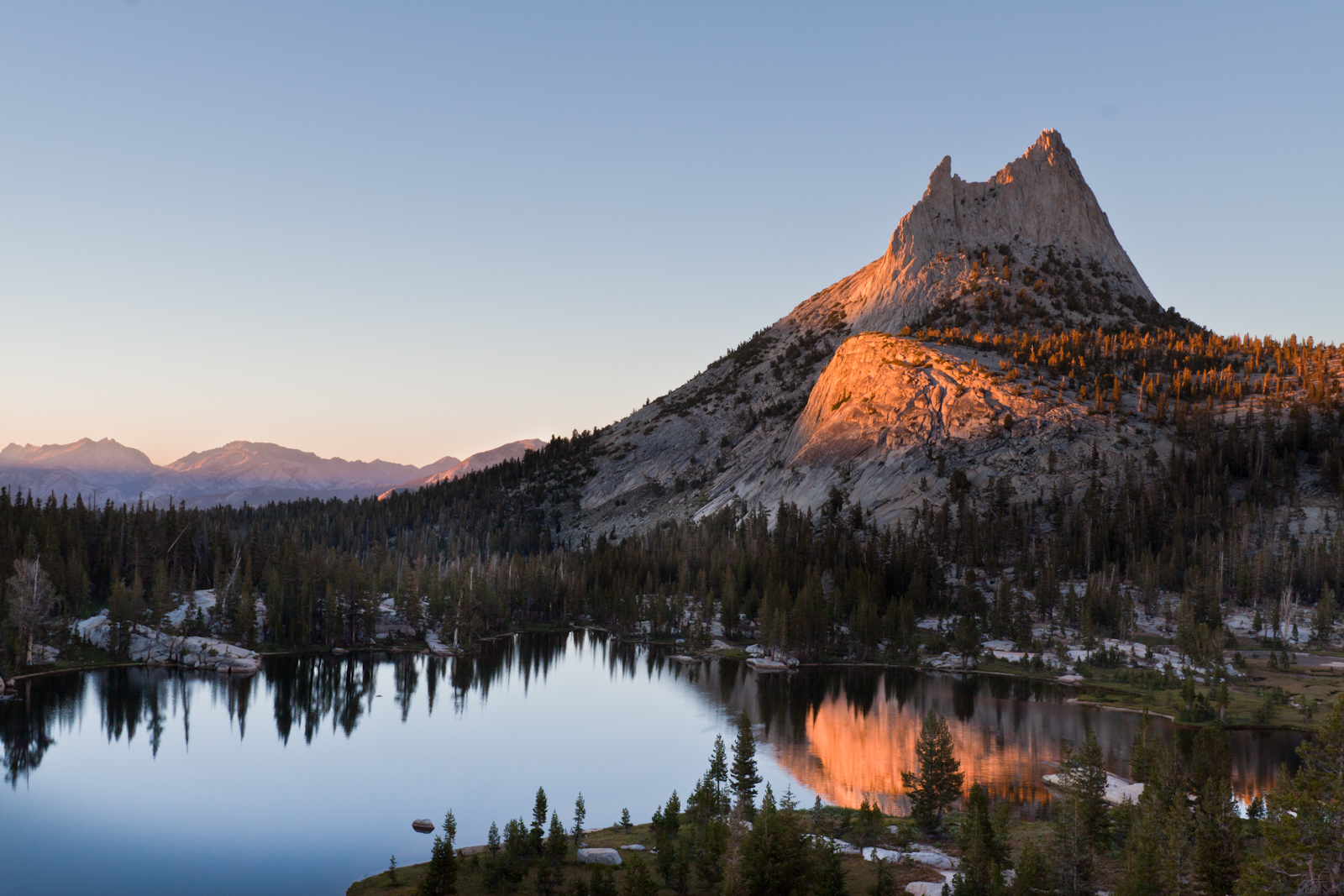
Hero photograph: Evening light on the Maroon Bells reflected in Maroon Lake near Aspen, Colorado. by mark byzewski, licensed under CC BY 2.0.