Capitol Peak: The Knife Edge, and the most committing standard 14er in Colorado
Y'all, Capitol is the one. The Knife Edge — 100 feet of Class 4 ridge maybe three feet wide, with thousand-foot drops on either side — is the crux of a 17-mile day deep in the Elk Mountains, and there is no easier way to the top.

Capitol Peak is the single most committing standard-route fourteener in Colorado, and y'all, that is not a marketing line. The day is seventeen miles round-trip. It crosses a 100-foot Class 4 ridge called the Knife Edge — maybe three feet wide at its narrowest, with thousand-foot drops on either side. There is no easier way to the top. Once you commit to the upper face, retreating is harder than continuing. Climbers who try Capitol without strong Class 4 experience routinely end up calling Mountain Rescue Aspen, and the peak has the highest fatality rate per attempt of any standard 14er. Take that seriously.
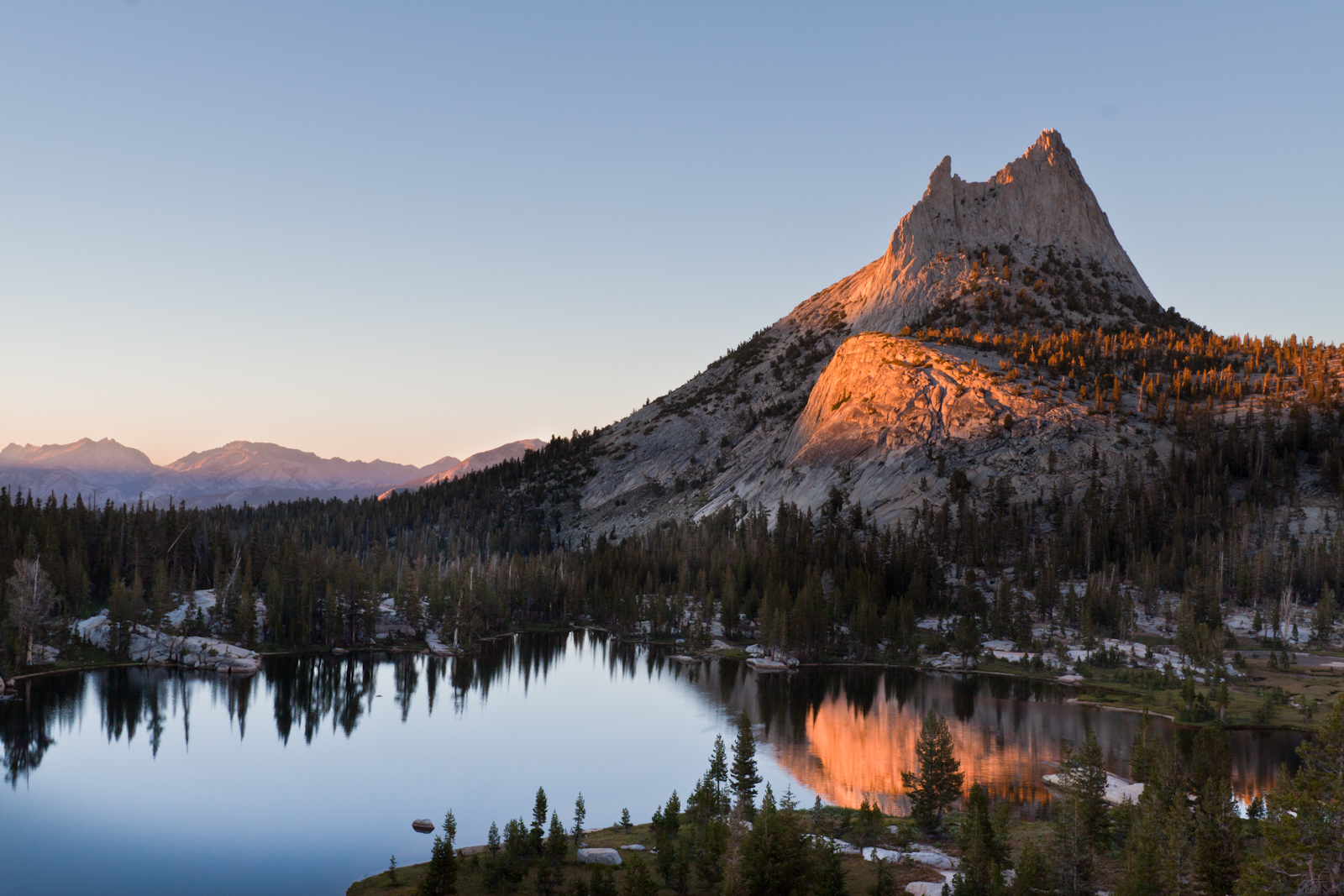
It is also one of the most beautiful days you can spend in the Colorado high country — a long walk into the heart of the Maroon Bells–Snowmass Wilderness, ending on a clean granite summit above the Capitol Creek drainage. The folks who get up Capitol the right way are the ones who treat it like the real mountaineering objective it is.
The peak at a glance
- Elevation: 14,137 ft (4,309 m)
- Rank in Colorado: 31th of 56 peaks above 14,000 ft
- Range: Elk Mountains
- County: Pitkin County
- Coordinates: 39.1503° N, 107.0833° W
- Standard route: Northeast Ridge with Knife Edge (Class 4) — 17 mi round-trip, ~5,300 ft gain
- Public land: Maroon Bells–Snowmass Wilderness, White River National Forest
How Capitol Peak got its name
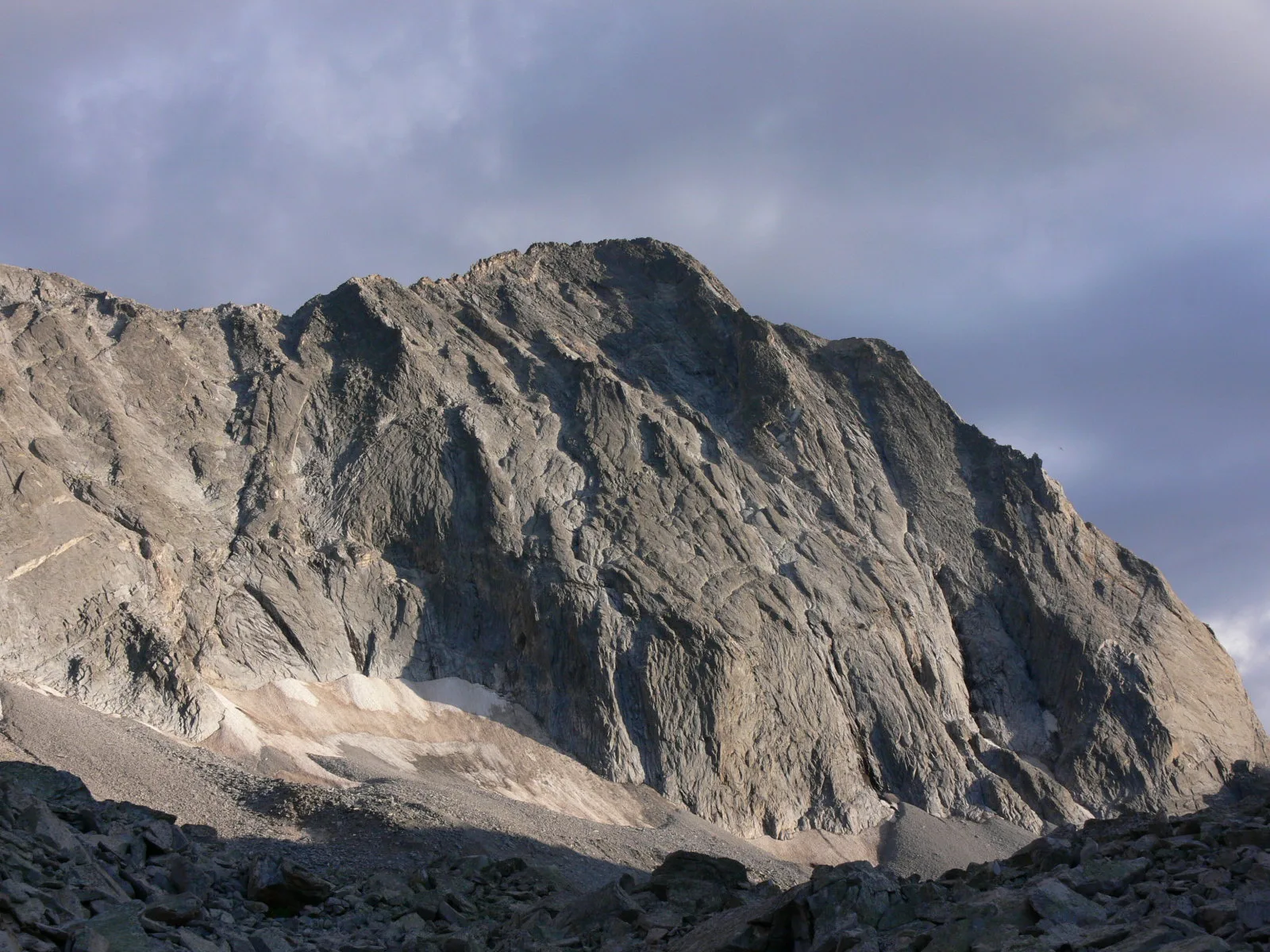
The peak got its name from a (kind of generous) resemblance to the dome of the U.S. Capitol Building, slapped on by the Hayden Survey in 1874. From certain angles in Capitol Creek, the upper face does form a smooth, rounded dome — though heck, the resemblance falls apart from anywhere closer than a couple of miles. The name has stuck regardless.
The standard route
The standard line is the Northeast Ridge from Capitol Lake. From the Capitol Creek trailhead, the trail climbs 6.5 miles into the basin to Capitol Lake at 11,600 feet — that's the bivvy, and it's the only practical way to break this climb across two days. From the lake, the route climbs a clean ridge to a feature called K2, drops slightly, crosses the Knife Edge, and then finishes on the upper summit pitches.
Most parties day-climb from the lake camp. Round trip from Capitol Lake to the summit is 5.5 miles with 2,500 feet of gain — but every foot of it is at altitude on terrain that demands attention the entire time. Total trip including the approach: 17 miles round-trip with about 5,300 feet of gain. Heck of a day.
Other ways up
There are no commonly-climbed alternatives that meaningfully reduce the difficulty. The west face is loose and almost nobody touches it. Winter ascents up the north face are committing technical mountaineering objectives.
So the standard answer to "is there an easier way up Capitol?" is: nope, and y'all, there shouldn't be.
When to climb
The Colorado fourteener climbing season is short. The standard window runs from late June through mid-September — after the snow has melted off the trail and before the first serious autumn storm. Outside that window, you're committing to a winter ascent: snow travel, avalanche assessment, post-holing through drifts, and route-finding without a visible trail.
Inside the window, the rule that has saved more Colorado lives than any other is be off the summit by noon. Afternoon convective storms build over the high peaks almost daily in July and August. Lightning is the leading weather killer in the Rockies. Plan for a pre-dawn start — most experienced climbers leave the trailhead between 4:00 and 5:30 AM.
Where it sits
The peak sits deep in the Maroon Bells–Snowmass Wilderness, fifteen miles by trail from either the Snowmass Creek or Capitol Creek trailheads. The Capitol Creek approach is the standard. Snowmass Village is the staging town; Aspen is forty-five minutes away by car. Plan on this being a real backcountry trip — y'all are not driving up to the trailhead the morning of.
What climbers wish they'd known
Do not skip the bivvy. Climbing Capitol as a single-day push from the trailhead is technically possible, but it adds 13 miles of approach to a day that already includes the Knife Edge. Y'all, the standard practice is to camp at the lake and climb from there. There's a reason it's standard.
The Knife Edge is psychologically harder than its rating. A lot of climbers who handle Class 4 just fine elsewhere find the Knife Edge difficult because the exposure is sustained for the full 100 feet — there is nowhere to rest. Sit-walking, straddling, or butt-scooting across is totally acceptable. Pride is the enemy on this ridge.
Helmets are non-negotiable. Rockfall above the Knife Edge has killed climbers on this route. Carry a helmet. Wear it.
Before you go
A 14er is a long, exposed day at altitude. Read these first if you haven't already:
- Planning your first multi-day backpacking trip — same logistics apply to a long single-day summit push.
- How to choose the right trail difficulty — converting class ratings into honest fitness estimates.
- Leave No Trace, in one minute — alpine tundra heals on a geological clock. Stay on the trail.
Looking for the standard route on the map? Browse Colorado trails on Outdoors or jump to the Near Me view if you're already in-state.
If you liked this peak
- Maroon Peak — the Bells Traverse
- Snowmass Mountain — the basin neighbor
- Pyramid Peak — the third Elk classic
Hero photograph: Capitol Peak rising above Capitol Lake, Maroon Bells–Snowmass Wilderness, Colorado. by Xpda, licensed under CC BY 3.0.