Park entrance fees, hours, and ranger-issued closures change without notice and may be out of date here. Always confirm current conditions, fees, and access restrictions with the managing agency before you travel. Outdoors is not responsible for closures, fines, or denied entry resulting from outdated information.
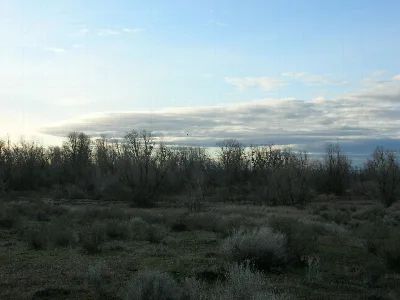
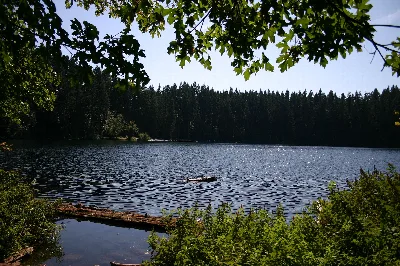
It's quiet and peaceful. In winter, nearly silent. In summer, listen for insect music. The sky is big, the space vast. It invites you to explore. Bring along your curiosity.Surprising to most people outside the Northwest, the landscape of eastern Washington is that of a desert. In its natural state, almost all of Columbia National Wildlife Refuge would be considered desert, with the exception of the naturally ephemeral Crab Creek. However, rather than a desert of cacti and mesquite, eastern Washington's desert is that of shrub-steppe, with sagebrush and bunchgrasses.Like most of eastern Washington, much of the refuge is no longer in its natural state. The construction of the Columbia Basin Project forever altered the landscape, bringing water to the desert. Seepage from irrigation structures and reservoirs created wetlands, riparian areas and small lakes on the once-dry landscape. The seasonal Crab Creek has become perennial, even providing habitat for endangered salmonids.The creation of lakes and wetlands would not have happened without the geologic upheavals of ages past. During the last Ice Age, sheets of ice spreading down from Canada blocked rivers with dams of ice. Occasionally—or perhaps hundreds of times—the dams failed, sending floodwaters greater than the flow of all the world's rivers combined tearing across eastern Washington's lava fields, gouging coulees, redistributing boulders, depositing massive sand and gravel bars, scraping the land bare in some areas and leaving behind rich soils elsewhere. Nowhere are these depressions and geologic nooks more prevalent than on the refuge. In turn, this torn-up land—the Drumheller Channeled Scablands National Natural Landmark—formed just the right topography to capture the new hydrology of the Columbia Basin Project, creating wetlands in the desert.Water in the desert means an abundance of life. In its original state, the land supported coyotes, rattlesnakes, mule deer, horned larks, sage sparrows and other creatures of the shrub-steppe, although densities were limited. Water has changed all this, however. Many of the naturally occurring species can be found at higher densities (e.g., mule deer). Other species are newcomers, totally dependent on the artificial water; black-necked stilts and American avocets are some of the flashier ones. Still more species that may have made an occasional appearance can now be found in great numbers—Canada geese, northern pintails, and the refuge's most famous visitors, lesser Sandhill cranes. It was because of this newly created wildlife oasis, and the need to provide suitable mitigation for the Columbia Basin Project, that the refuge was created in 1944 "for migratory birds and other wildlife."Another thing that water brings is recreational use. Without water, there wouldn't be any fishing,waterfowl hunting, or boating. It's likely that there would be less hiking, biking, horseback riding, or sightseeing; visitors are drawn to water and the vegetation and wildlife it fosters. Water brings the Sandhill cranes, the migrating songbirds and the waterfowl that people come to see, learn about and find for their "life-lists." It provides the serenity and the visual contrasts that draw the eye, and then the feet, of visitors. Without water, recreation and visitor use would be dramatically less on Columbia National Wildlife Refuge.The Columbia Basin Project did more than create the need for, and provide water to, the refuge. It also created irrigated farmland, which secondarily provided a food source for many of the refuge's species. For example, the great concentration of Sandhill cranes found on the refuge in the spring is a recent event, beginning in earnest in the late 1980s. Before then, the cranes likely passed through the area on their way to breeding grounds in south-central Alaska without more than a brief stop. Now, leftover grain in farmers' fields has become an important food source for migrating cranes, concentrating them by the thousands for several weeks in late winter and early spring. Other wildlife, most notably migrating waterfowl, mule deer and numerous rodent species, also take advantage of the harvest. While much of the habitat found on the refuge (most of the lakes, wetlands, springs and perennial streams) is the result of an artificial infusion of water, it is important to note that the habitats themselves are not artificial. Natural wetlands and shallow lakes can be found within the Columbia Basin, and those on the refuge function the same way as naturally occurring ones found elsewhere within the area. So, while many of the habitat types on the refuge would naturally be found in far smaller acreages, if at all without seepage water from the Columbia Basin Project, the only non-natural habitat types present are farm fields and moist soil management areas.
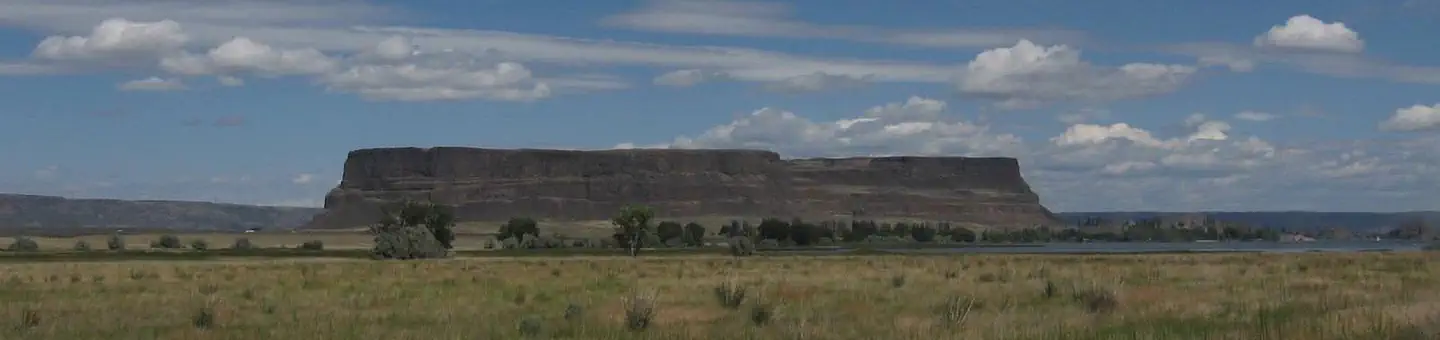
Columbia National Wildlife Refuge is a scenic mixture of rugged cliffs, canyons, lakes, and sagebrush grasslands. Formed by fire, ice, floods, and volcanic tempest, carved by periods of extreme violence of natural forces, the refuge lies in the middle of the Drumheller Channeled Scablands of central Washington. The area reveals a rich geologic history highlighted by periods of dramatic activity, each playing a major role in shaping the land. The northern half of the refuge, south of Potholes Reservoir, is a rugged jumble of cliffs, canyons, lakes, and remnants of lava flows. This part of the Scablands, known as the Drumheller Channels, is the most spectacularly eroded area of its size in the world and was designated as a National Natural Landmark in 1986.
Source: Wikipedia — text licensed CC BY-SA 4.0. Verify alerts and operational details with the managing agency below.
Reviews
No reviews yet
Be the first to share your experience and help others plan their visit.